Regrading and swales
Reshaping the ground so it falls away from the house and toward an outlet, and cutting shallow swales that carry water around the building. Sod or seed goes back over the finished grade.
Water that stands in a yard for days, runs toward the house or pools against the slab is a grading problem before it is a pipe problem. We look at where the water comes from and where it is allowed to go, then regrade, add surface drains, pipe the downspouts or install a French drain: whichever the lot actually needs. Drainage as its own project, and drainage as part of a slab, patio, pool or new home, are both work we take.
A drain installed in the wrong place moves no water. Before recommending anything we walk the lot, ideally with your photos of it during or just after rain, and work out which of these is going on. It is often more than one.
Which of these a yard needs is decided on site, after we have seen where the water comes from. The simplest fix that works is the one we recommend: regrading is often enough, and pipe is for water that grading alone cannot move.
Reshaping the ground so it falls away from the house and toward an outlet, and cutting shallow swales that carry water around the building. Sod or seed goes back over the finished grade.
A trench lined with filter fabric, a perforated pipe laid to a continuous slope and clean gravel around it, to collect water that soaks into saturated ground and carry it to an outlet.
Catch basins at low spots and channel drains across patios, driveways and garage aprons, connected to solid pipe that carries the water away.
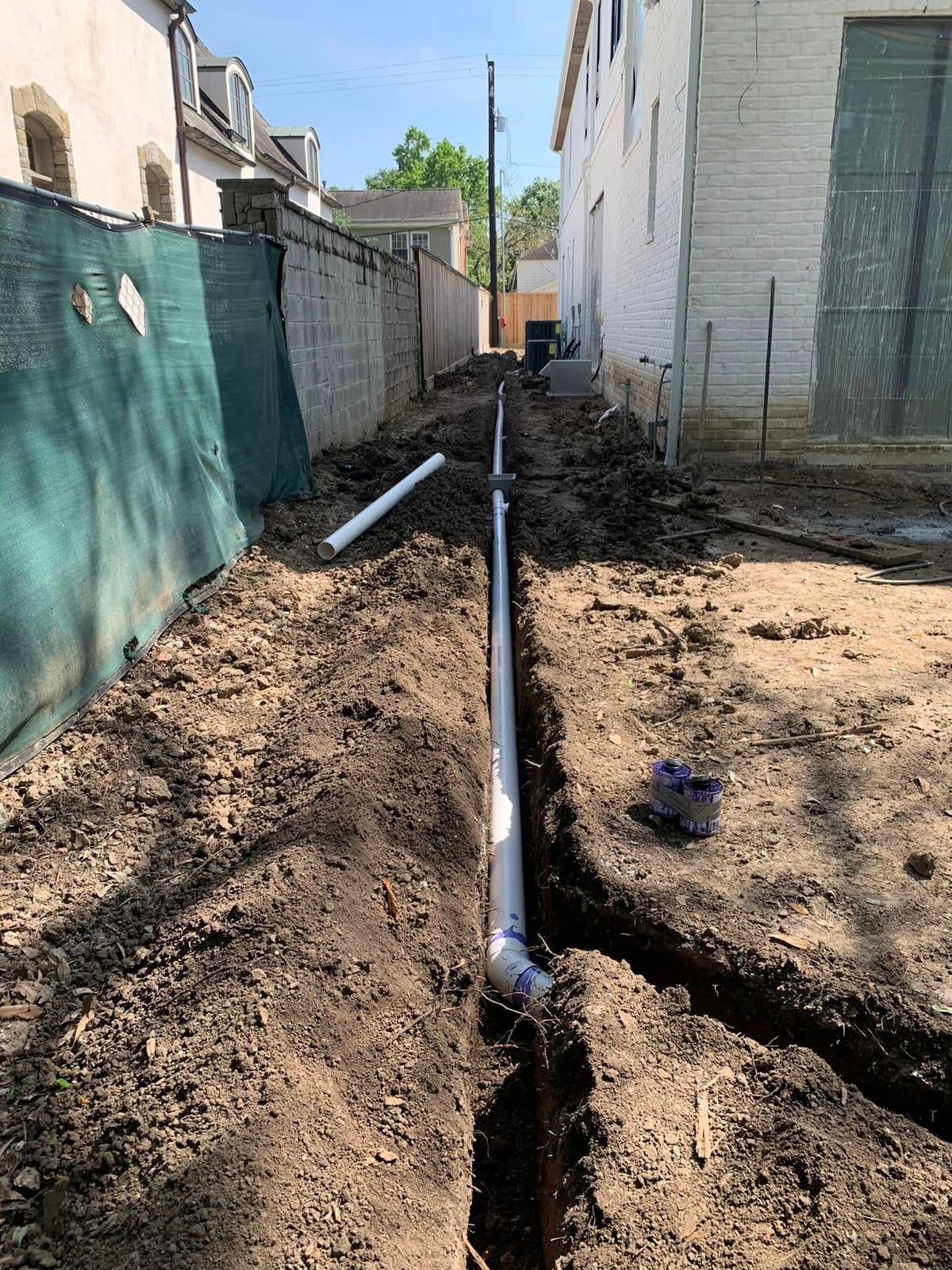
Solid pipe from the downspouts, buried and sloped to a pop-up emitter or the street, so roof water is released well away from the foundation.
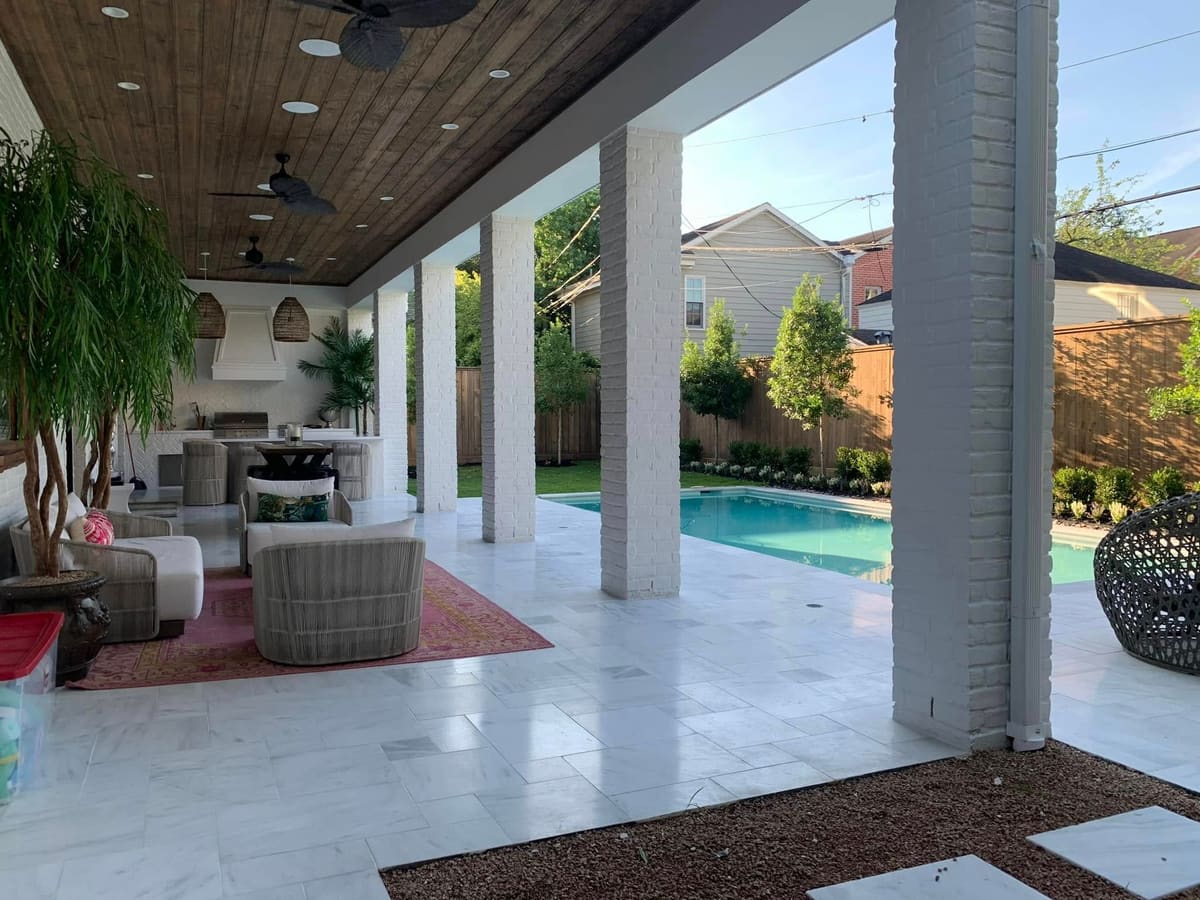
New flatwork changes where water goes. On a concrete, outdoor living or pool project, the drains and the grades are planned with the slab, not added afterwards.
On a lot being prepared for a house, drainage is part of the site grading. Where the city or county requires an engineered drainage plan, a licensed civil engineer designs it and we build to it.
Three things combine here. The land is flat, so there is very little natural fall to work with and an inch of grade matters. The soil is clay, which absorbs water slowly and then holds it. And the rain arrives in short, heavy bursts that deliver more water in an hour than the ground can take in a day. A yard that looks fine in a dry month can have nowhere to send that water when it comes.
That is also why drainage work here is mostly about slope and outlets. A French drain is useful where water is trapped in the soil, but a pipe in saturated clay with no outlet lower than the yard is just a buried trench full of water. We check the elevations before we recommend one.
Collecting water is the easy half. The other half is releasing it somewhere it is permitted to go, and that is where do-it-yourself drainage most often creates a new problem.
A slab foundation on clay wants the soil around it to stay at an even moisture level. Soil that is soaked on one side of the house and dry on the other swells and shrinks unevenly, and that movement is what stresses a slab. Getting roof water and surface water away from the foundation on every side is the most useful thing a homeowner can do for it.
Good drainage is prevention, not repair. If a house already has cracks, sticking doors or sloping floors, an engineer should look at it; we do not diagnose foundation problems or claim that a drain will fix one. For how new slabs are built to cope with this soil, see concrete.
We walk the lot, check slopes and outlets, and look at your photos of the yard in the rain.
A written, itemized estimate that says what goes where, and why.
HOA or permit approvals where they apply, and 811 utility locates before digging.
The ground is reshaped, trenches are cut to slope, and sprinkler lines we cross are flagged for repair.
Pipe, fabric, gravel and basins go in, slopes are checked and trenches are backfilled.
The lawn is restored over the work, the drains are checked with water, and we show you where the outlets are.
Almost every question people search about French drains is about cost, and the honest answer is that it depends on the yard. We price after seeing the lot; these are the things that decide the number.
After a site visit you get a written, itemized estimate.
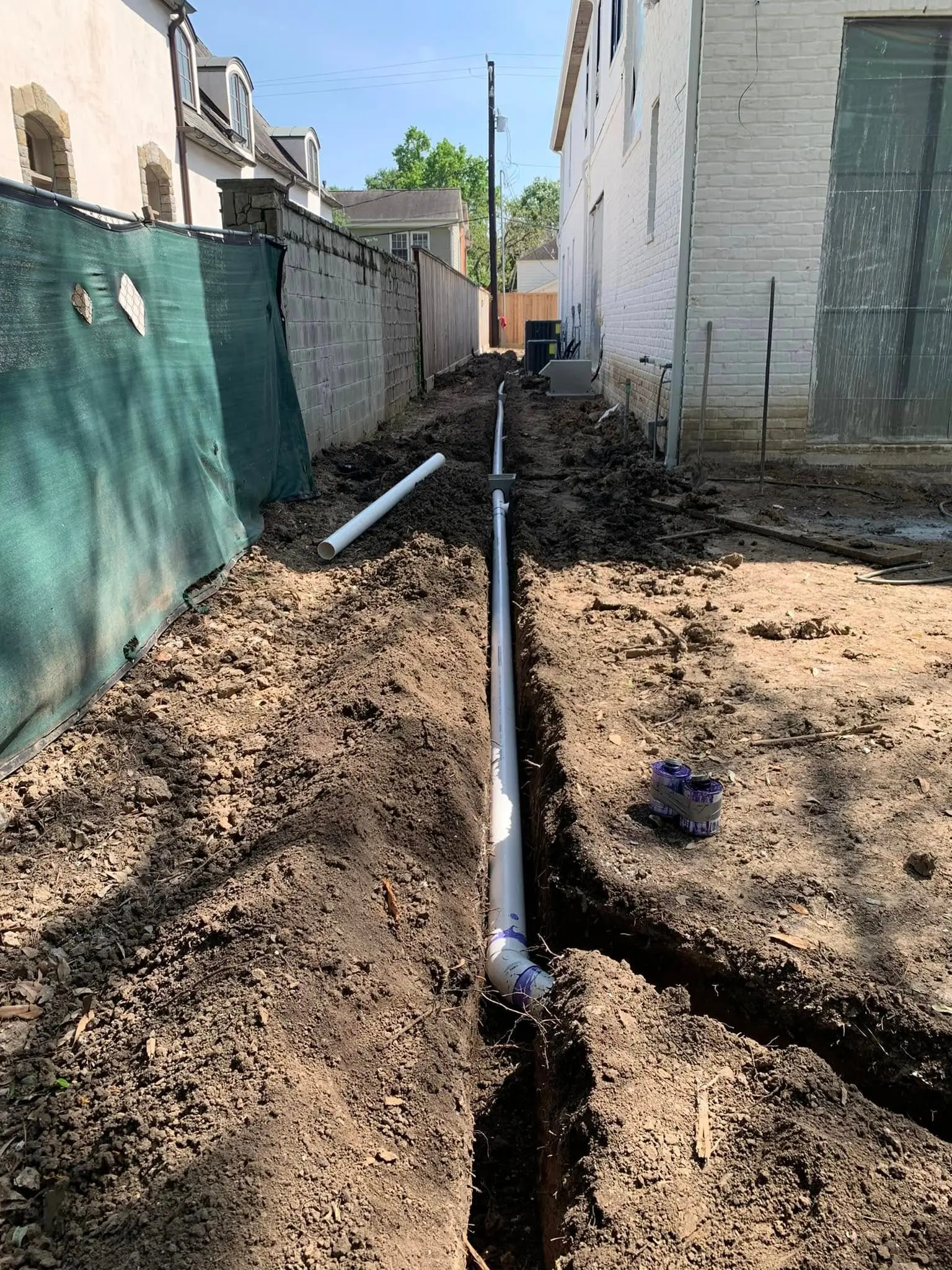
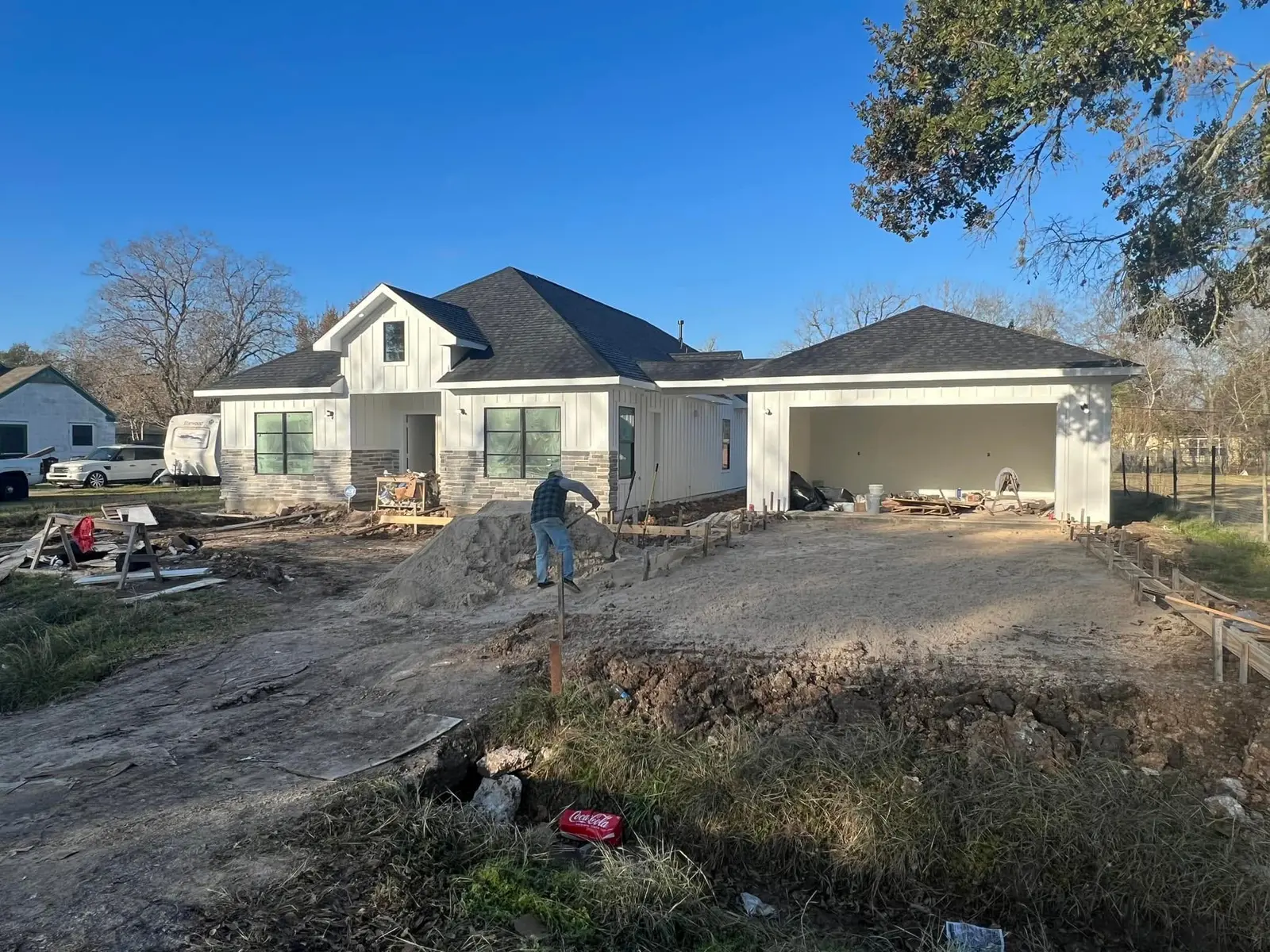
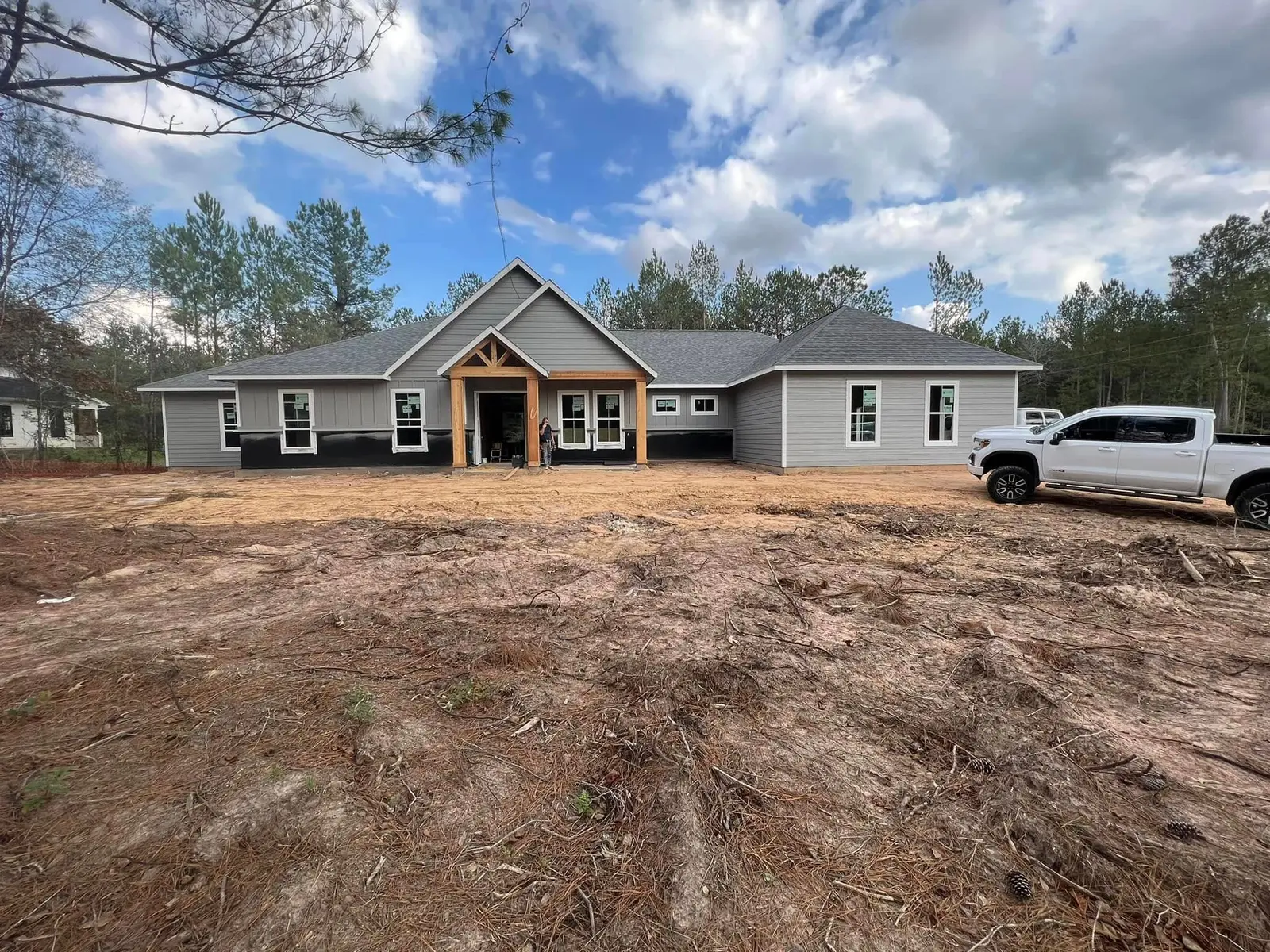
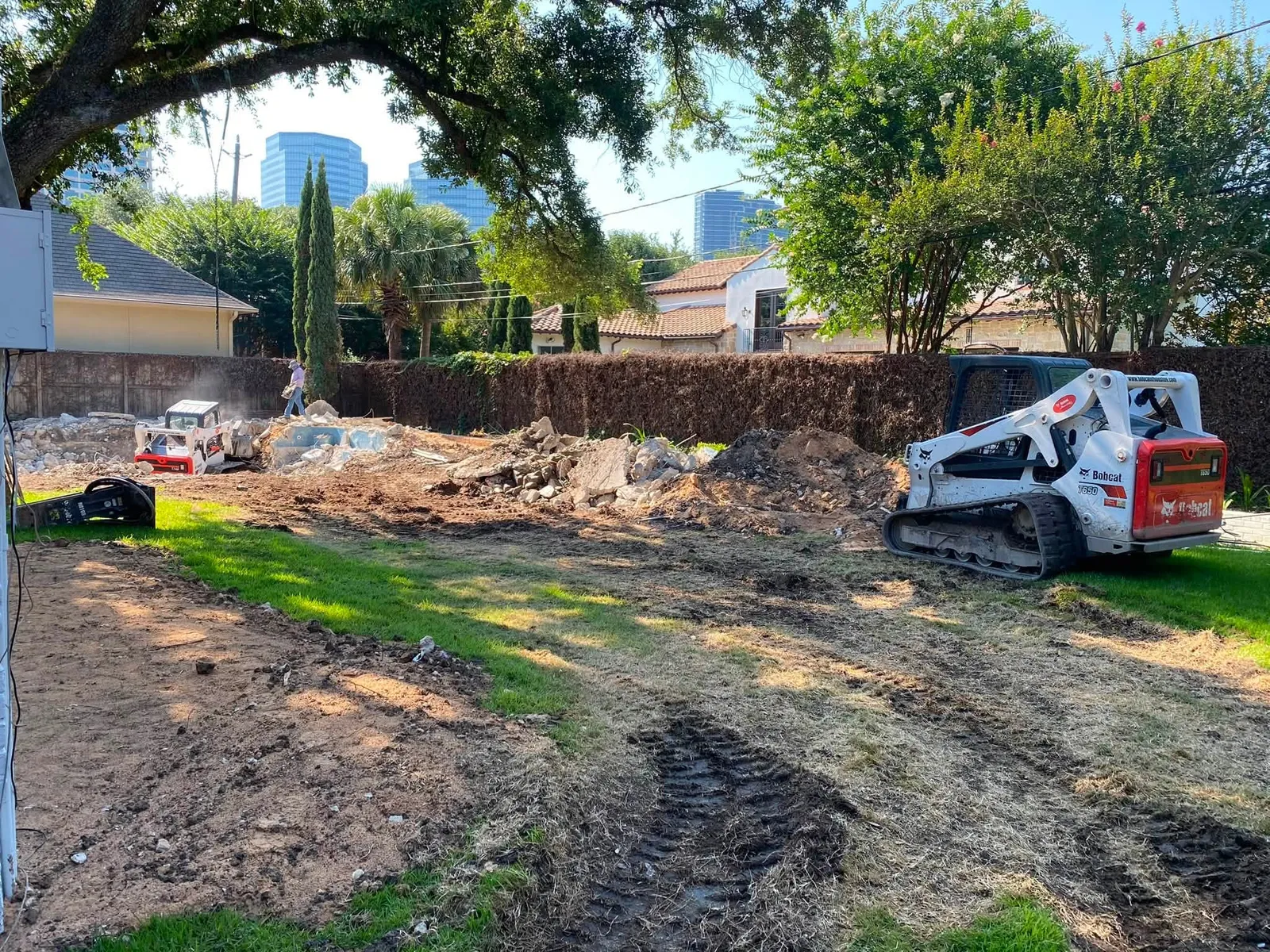
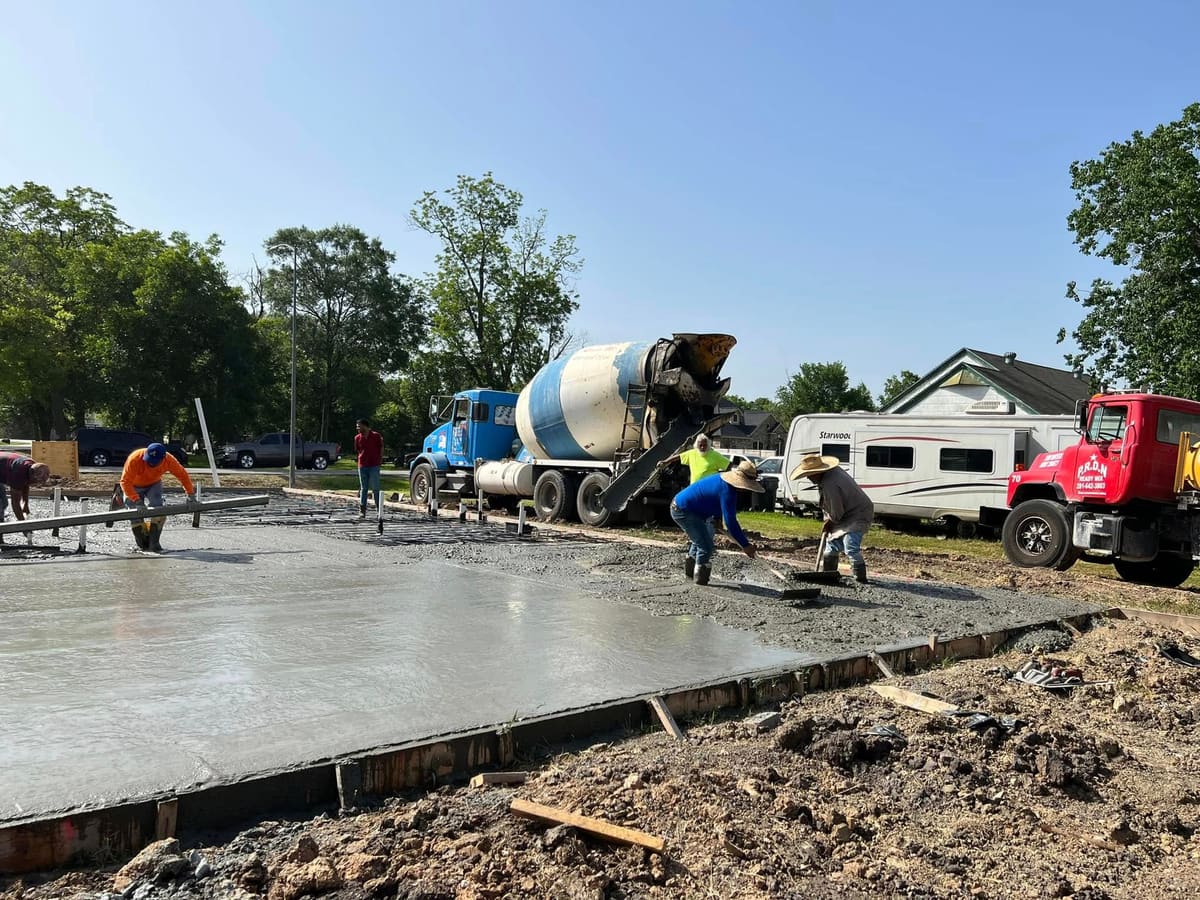
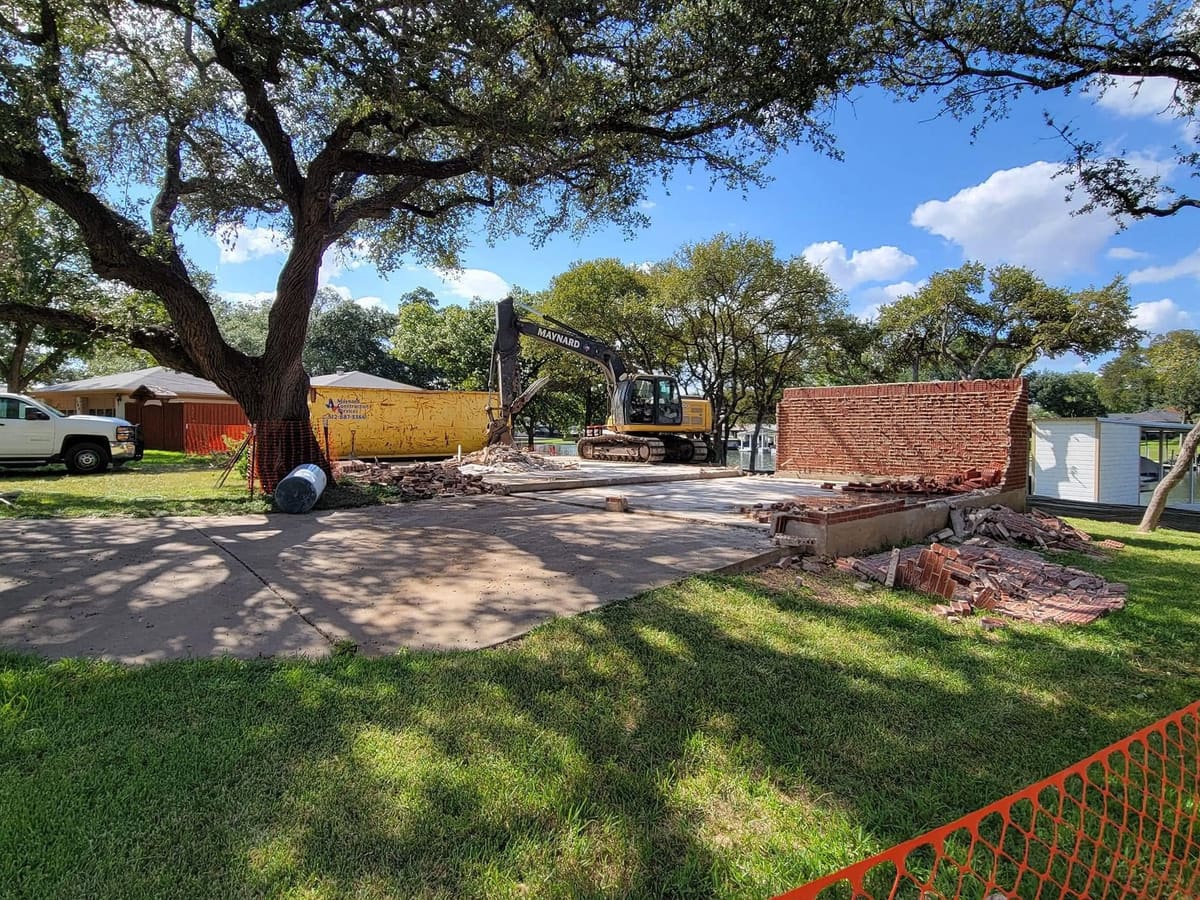
A drain line going in, and grading work on our projects. Select a photo to see it larger.
Still unsure? Ask us directly and we will answer in plain terms.
Send a few details and we will follow up to schedule a site visit. You get a written, itemized estimate before any work starts.
Tell us what you are planning. We follow up to schedule a site visit.