Hardwood
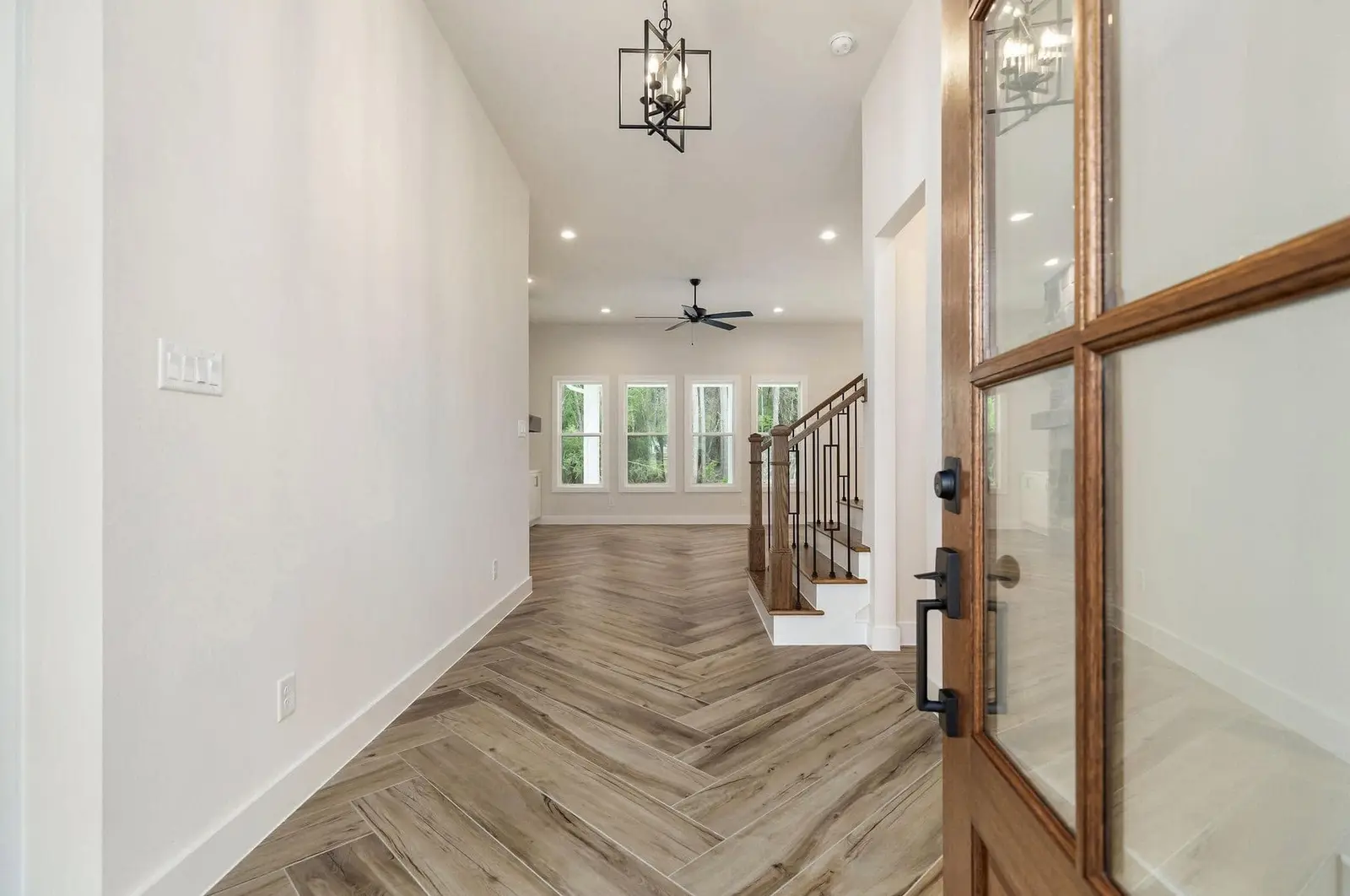
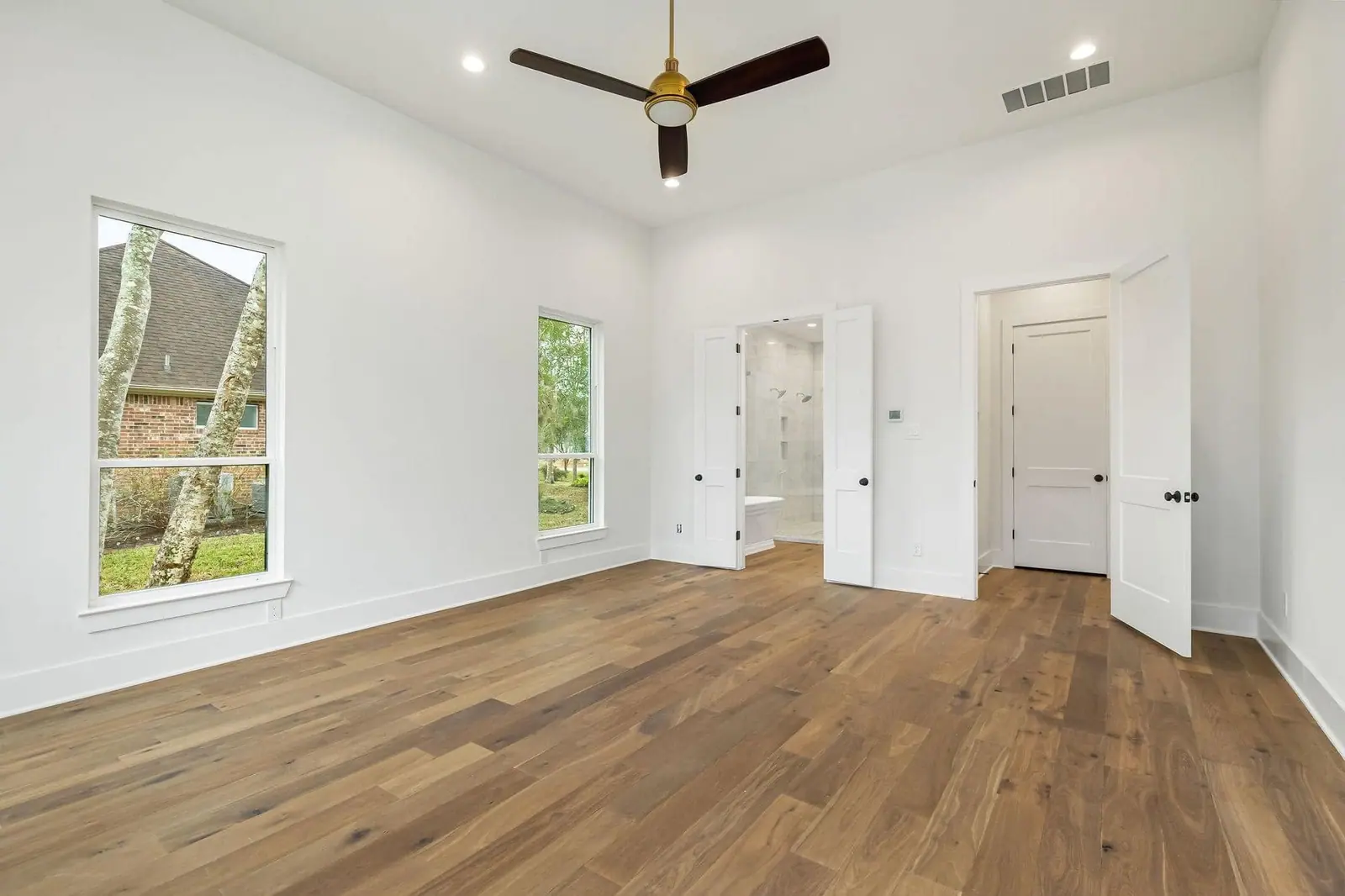
Solid hardwood nailed to a wood subfloor, in strip, wide plank or patterns such as herringbone. On a concrete slab, solid wood needs a subfloor built for it first, which is why engineered wood is the usual choice there.
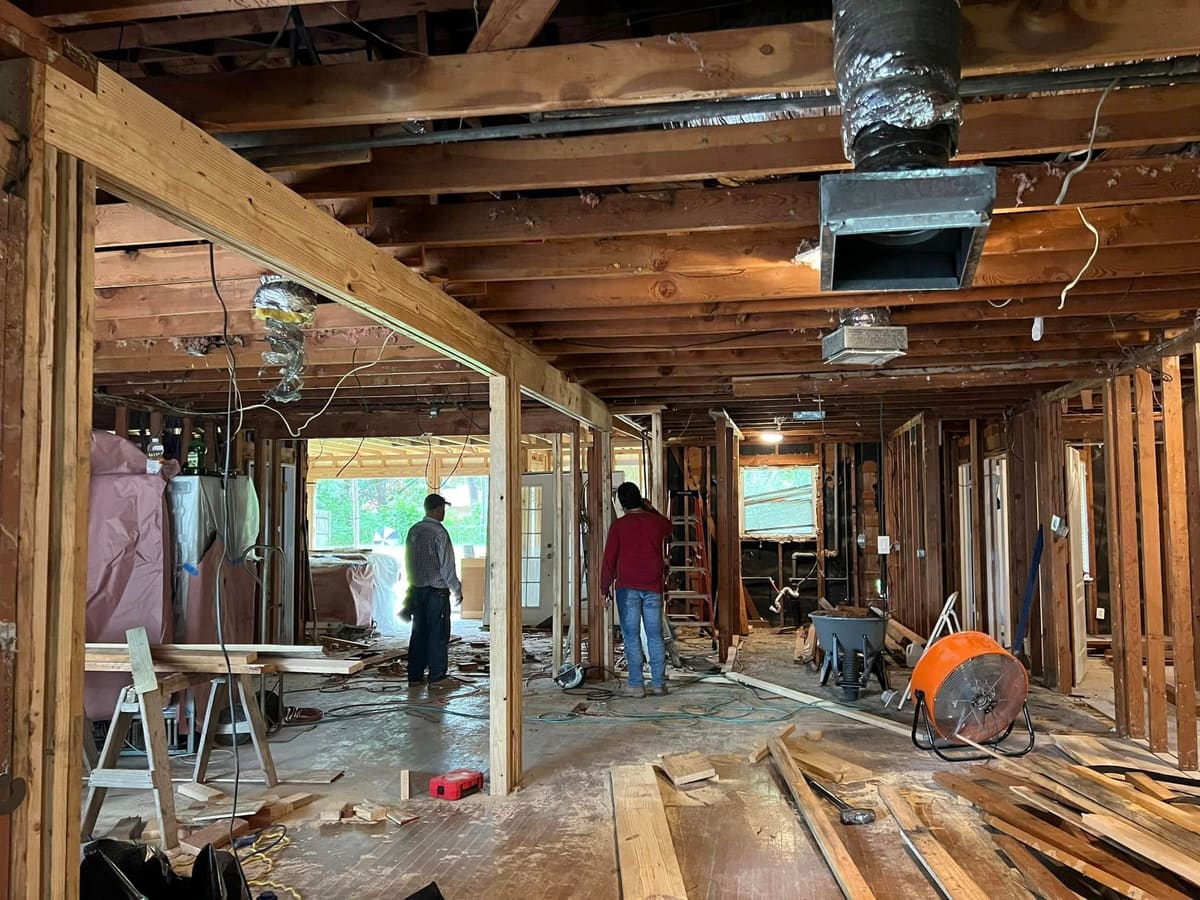
A floor is only as good as what is under it. We install hardwood, engineered wood, luxury vinyl plank and tile, and we do the part that showrooms and labor-only installers leave out: taking up the old floor, flattening the slab or repairing the subfloor, dealing with moisture, and finishing the doors, baseboards and transitions so the room looks built that way. New floors as their own project, and floors as part of a remodel, are both welcome.
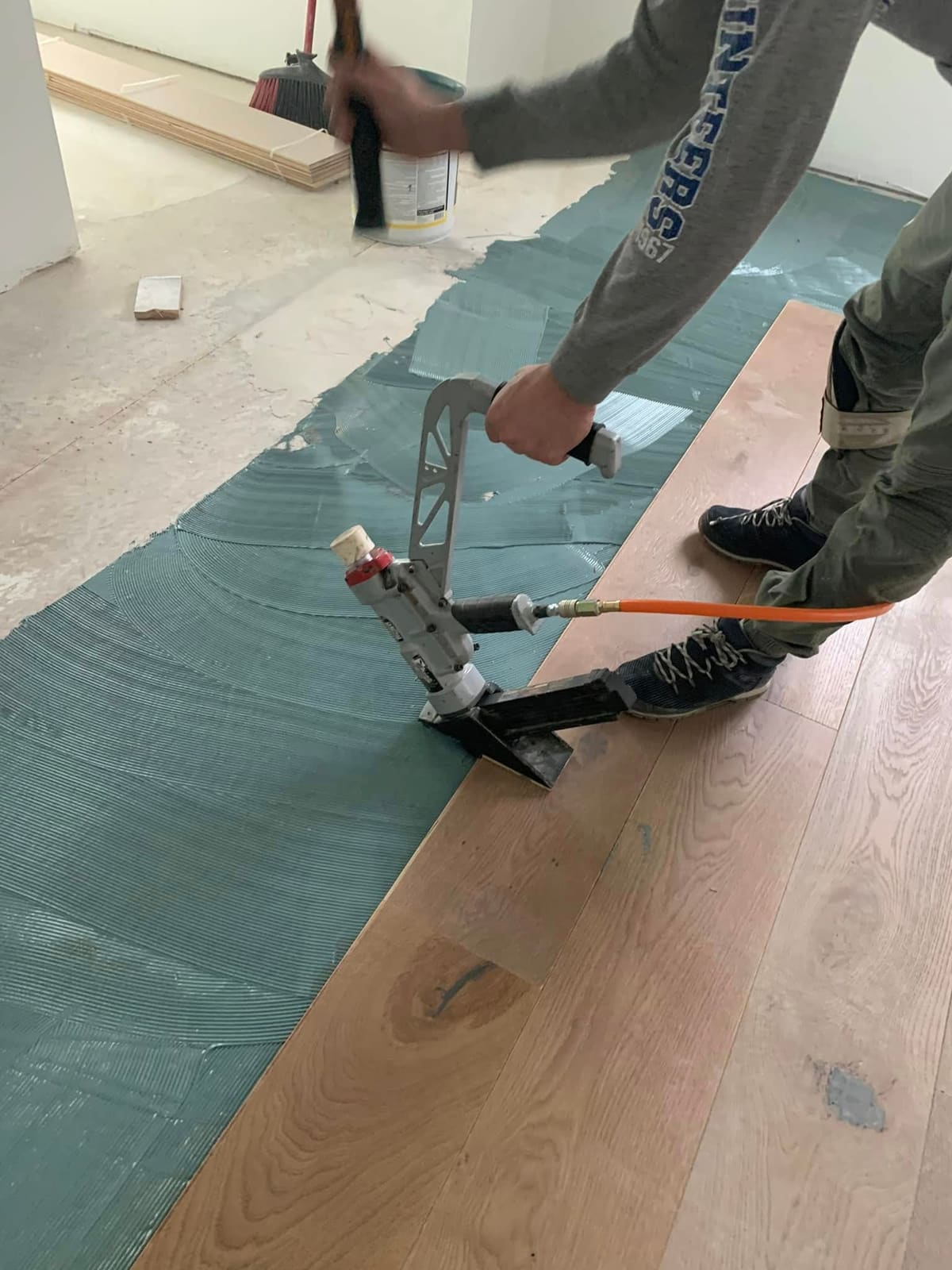
Flooring is installed by our crews and by flooring and tile installers we work with, under one contract and one schedule.
Solid hardwood nailed to a wood subfloor, in strip, wide plank or patterns such as herringbone. On a concrete slab, solid wood needs a subfloor built for it first, which is why engineered wood is the usual choice there.
A real wood surface on a stable layered core, made to be glued to a slab or floated. It gives the look of hardwood in most Houston houses, which sit on concrete.
Waterproof, hard-wearing and forgiving in kitchens, baths, rentals and busy households. It shows every dip in the floor under it, so the preparation matters more than the product.
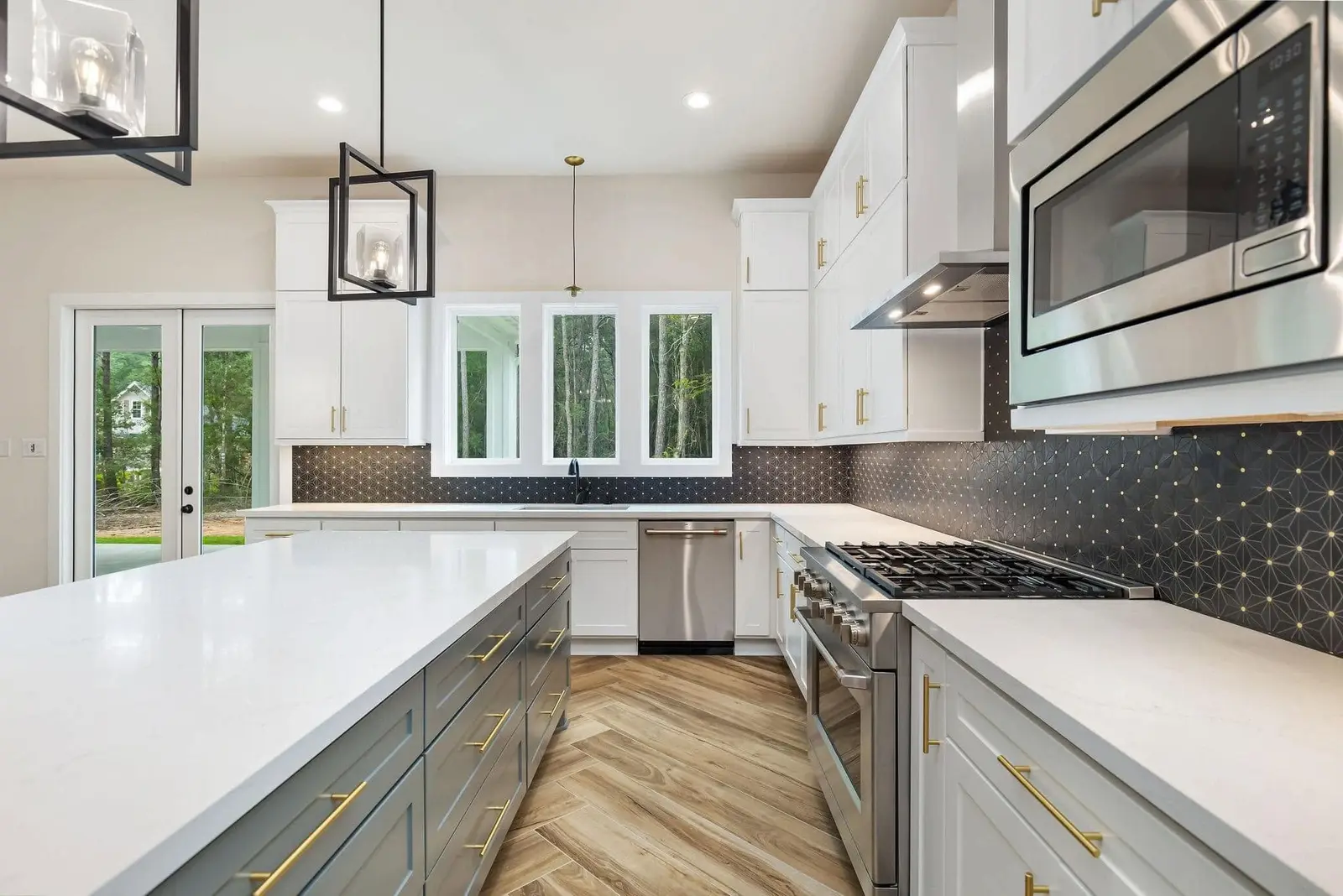
Floor tile set on a flat, properly prepared surface with the right mortar and movement joints, including large-format tile and wood-look plank tile, which need the flattest floors of all.
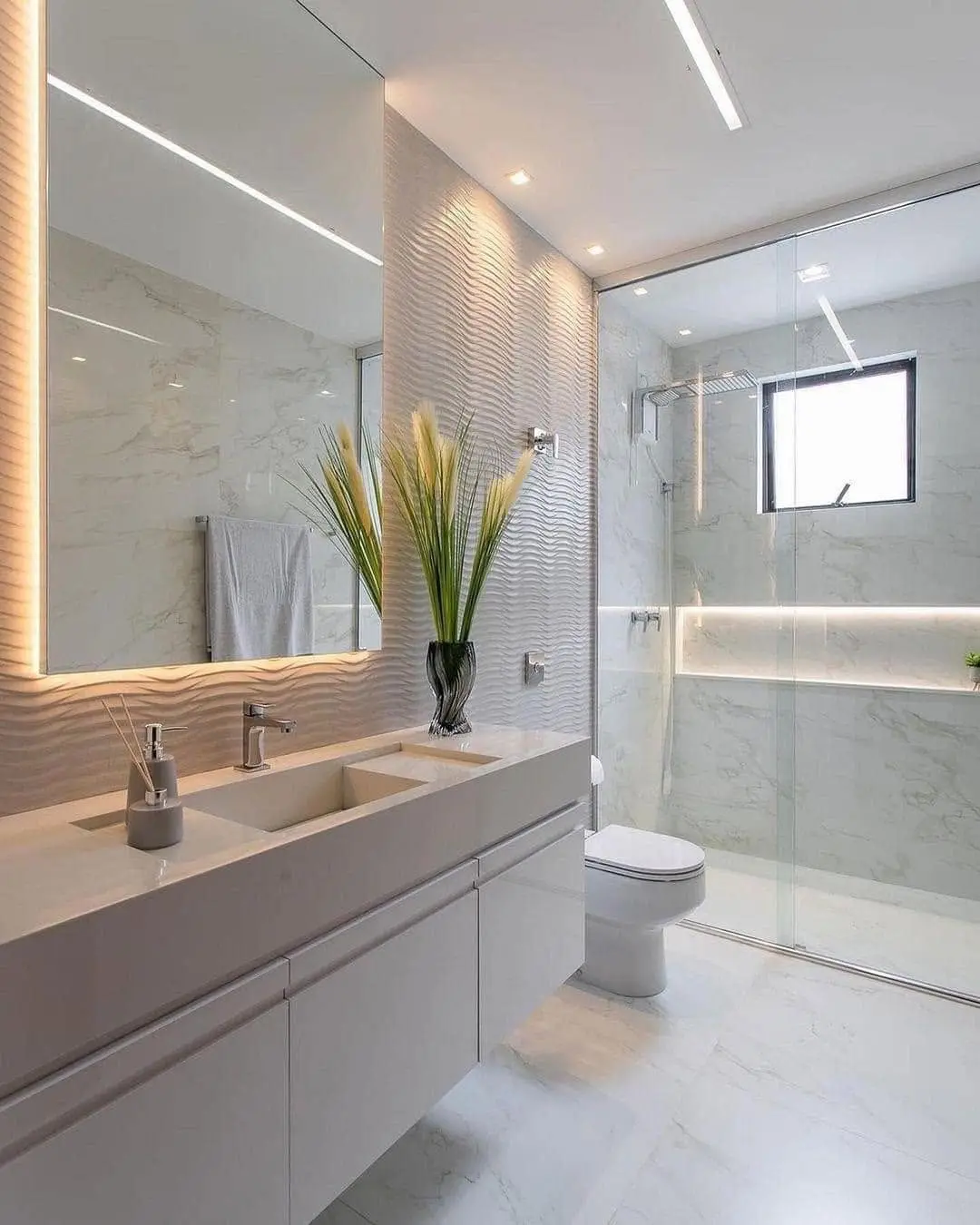
Marble, travertine and other stone floors, set and sealed. Stone varies from piece to piece, so the layout is dry-laid and agreed with you before it is set.
New flooring is part of nearly every kitchen, bathroom and whole-home project we run, sequenced with the cabinets, plumbing and paint so nothing is installed twice.
Most flooring that fails early was installed well on a surface that was not ready for it. Planks that click loose, tile that cracks along a line, grout that crumbles and floors that sound hollow all trace back to what was underneath. This is the work we price and do before the first board or tile goes down.
Almost every house here is built on a concrete slab poured on damp clay, in a humid climate. Concrete lets moisture vapor pass through it, and wood reacts to moisture by swelling, cupping and coming unglued. That is the reason wood floors over slabs fail in Houston, and it is preventable.
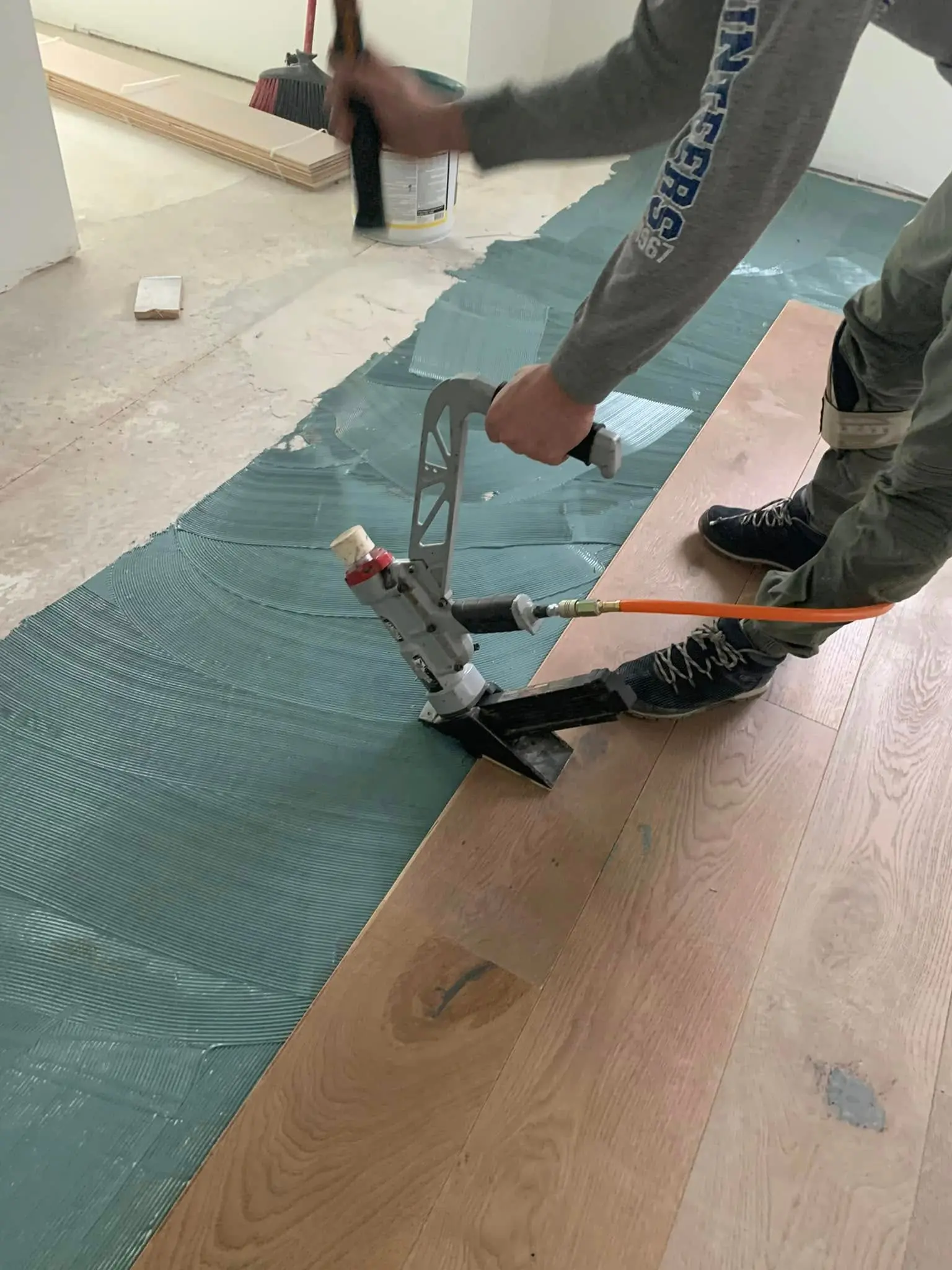
Before wood goes on a slab we test the slab for moisture and follow what the flooring manufacturer requires for that product, which usually means a moisture-barrier adhesive or membrane. The wood is delivered ahead of time and left in the air-conditioned house so it settles to the conditions it will live in. If the readings say the slab is too wet for wood, we tell you, and talk through the options: a different product, a mitigation system, or finding where the water is coming from.
Water from outside the slab is a separate problem. If the yard holds water against the house, fix that first; see yard drainage and grading.
Floor tile in a kitchen, laundry or bathroom is flooring work. A tiled shower is a different thing: it is a waterproofing system that happens to be finished in tile, and it is covered on our walk-in showers and bathroom remodeling pages. Backsplashes are part of kitchen remodeling. When a project includes both, one crew and one schedule cover all of it.
After a leak or a flood, the flooring is usually the first thing to come out and the last to go back. The slab or subfloor has to be dry before a new floor is installed over it, or the new floor fails the same way. If your floors were damaged by water or a storm, start with storm and water damage restoration; the flooring is part of that rebuild.
Most flooring projects are done while the family is living in the house, so the order of rooms matters.
We measure, look at what is there now, check the slab or subfloor and talk through materials.
Removal, preparation, material, installation and trim priced as separate lines.
Material is ordered, checked on delivery and, for wood, left in the house to acclimate.
Furniture is moved, old flooring comes up, and the surface is flattened, repaired and tested.
The floor is laid room by room in an order that keeps a kitchen and a bathroom usable.
Baseboards, transitions and door adjustments, clean-up and a walkthrough with you.
The price of the material is the part everyone looks at, and it is often less than half of the job. These are the things that move the total.
After a visit we give you a written, itemized estimate. We do not quote a price per square foot before seeing the floor, because the preparation is what varies.
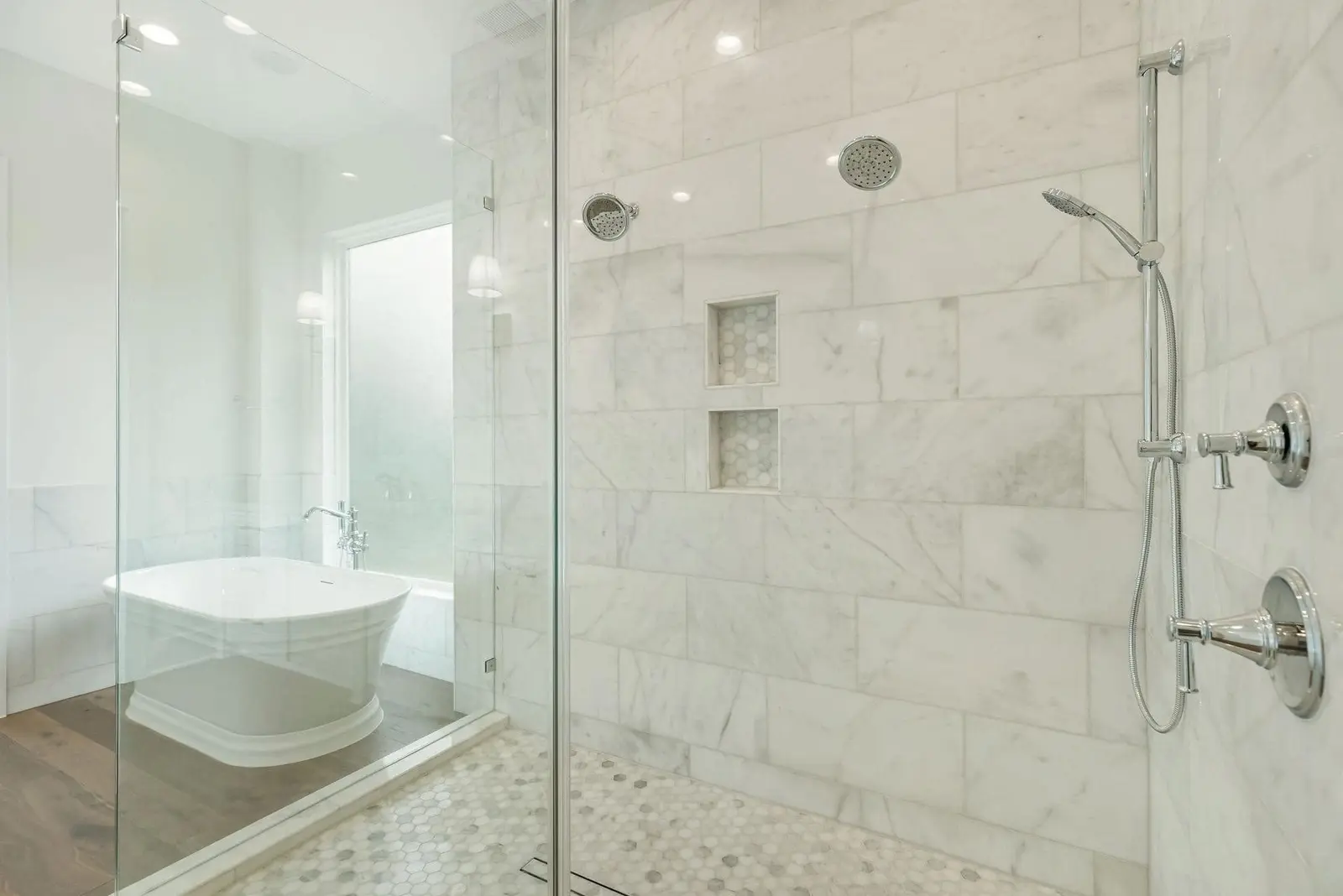
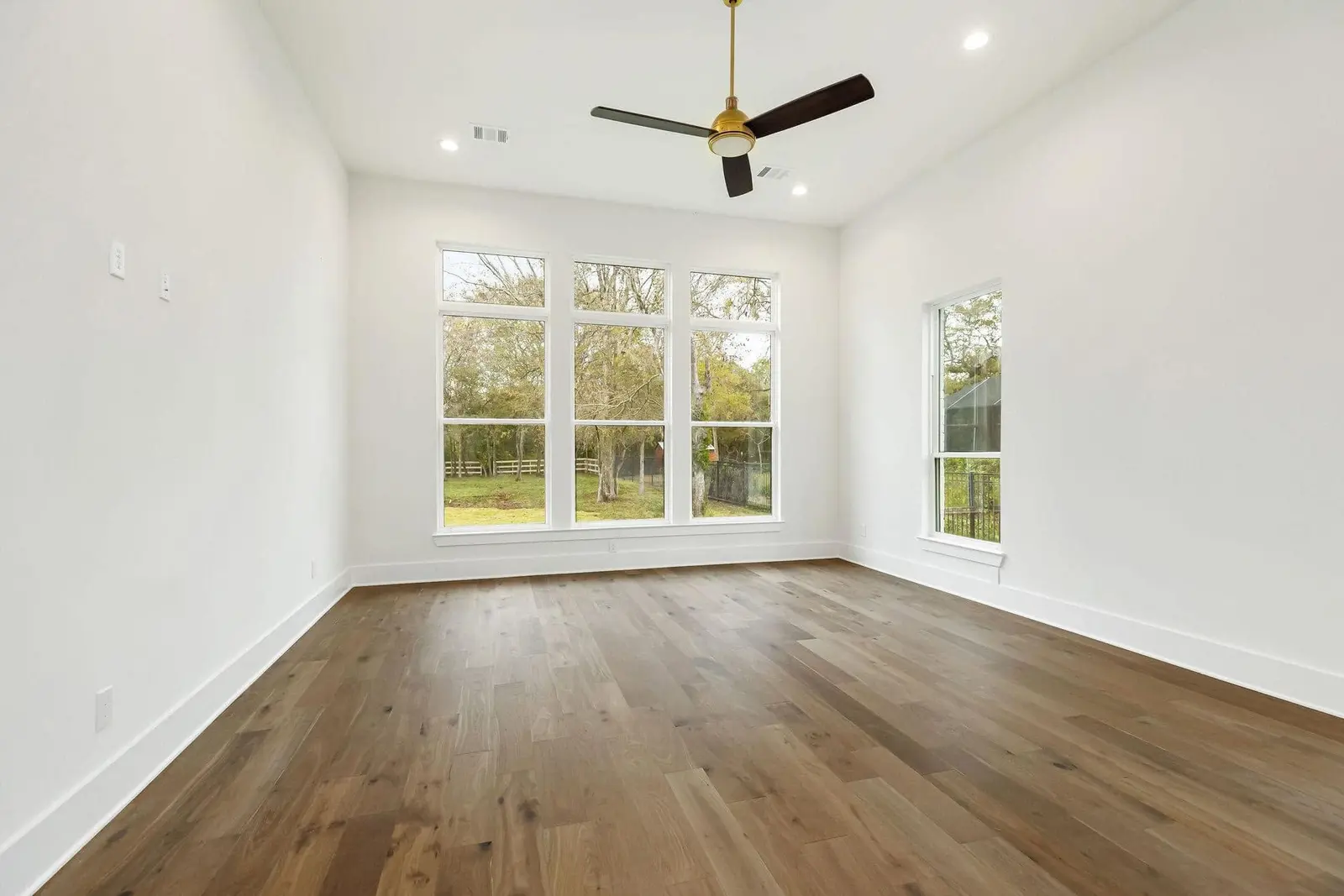
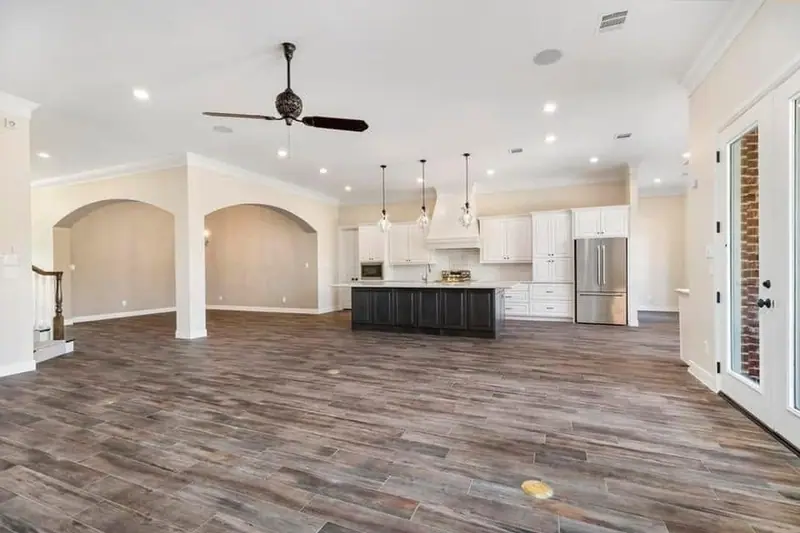
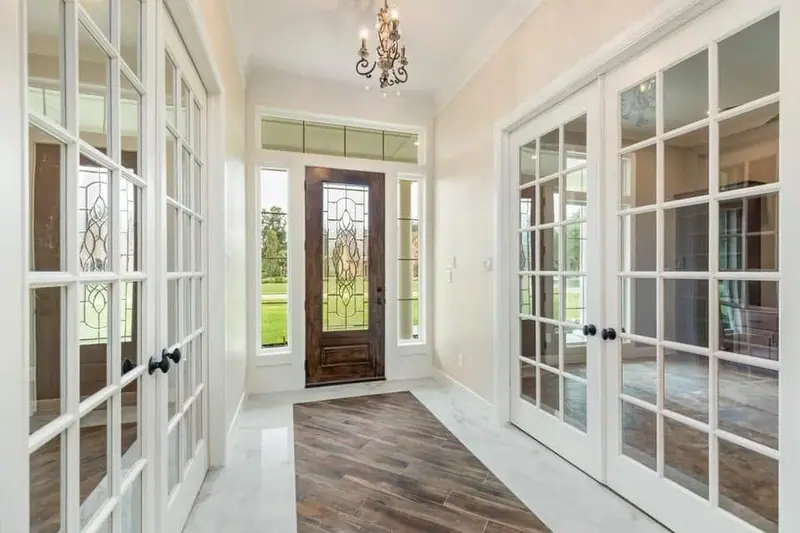
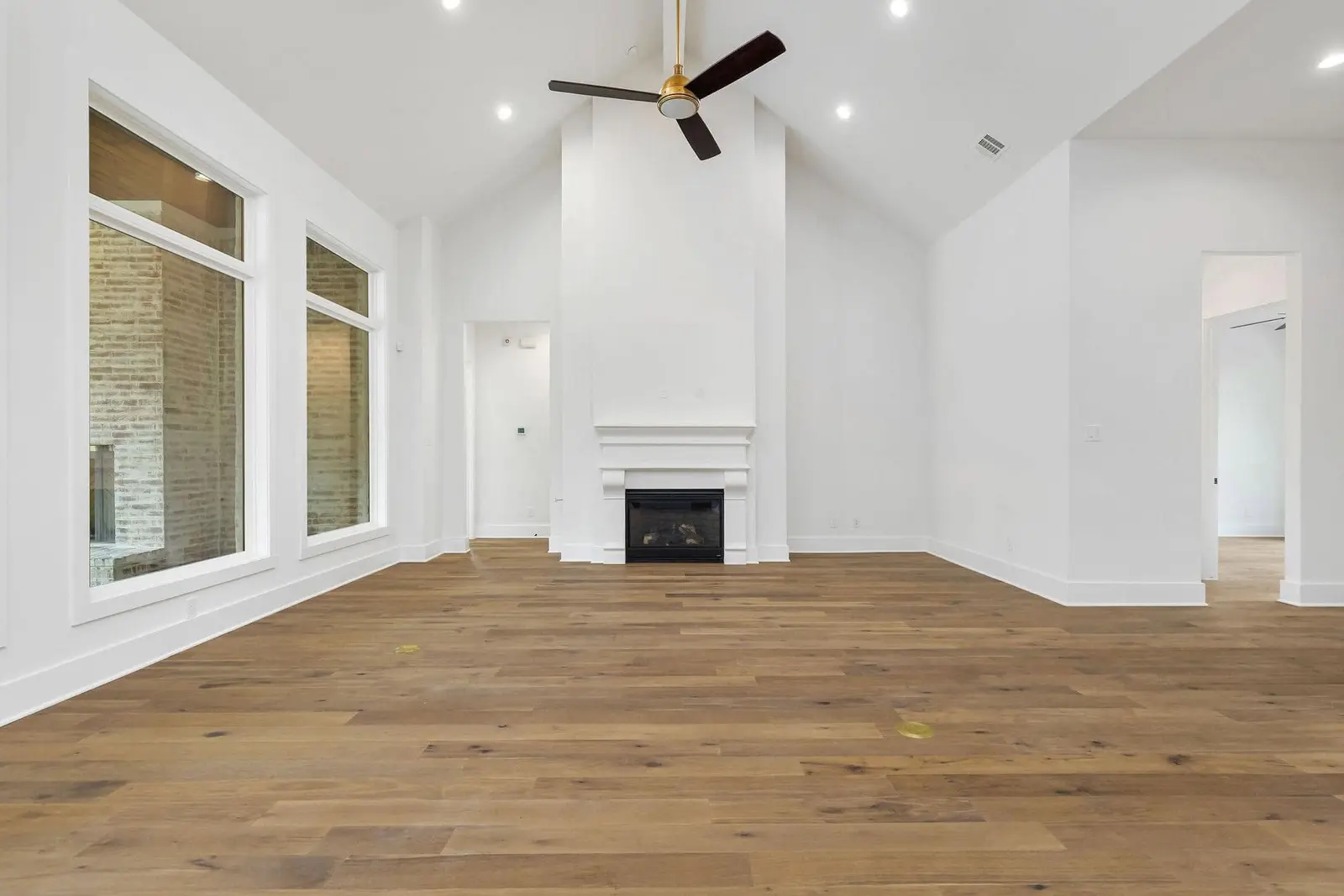
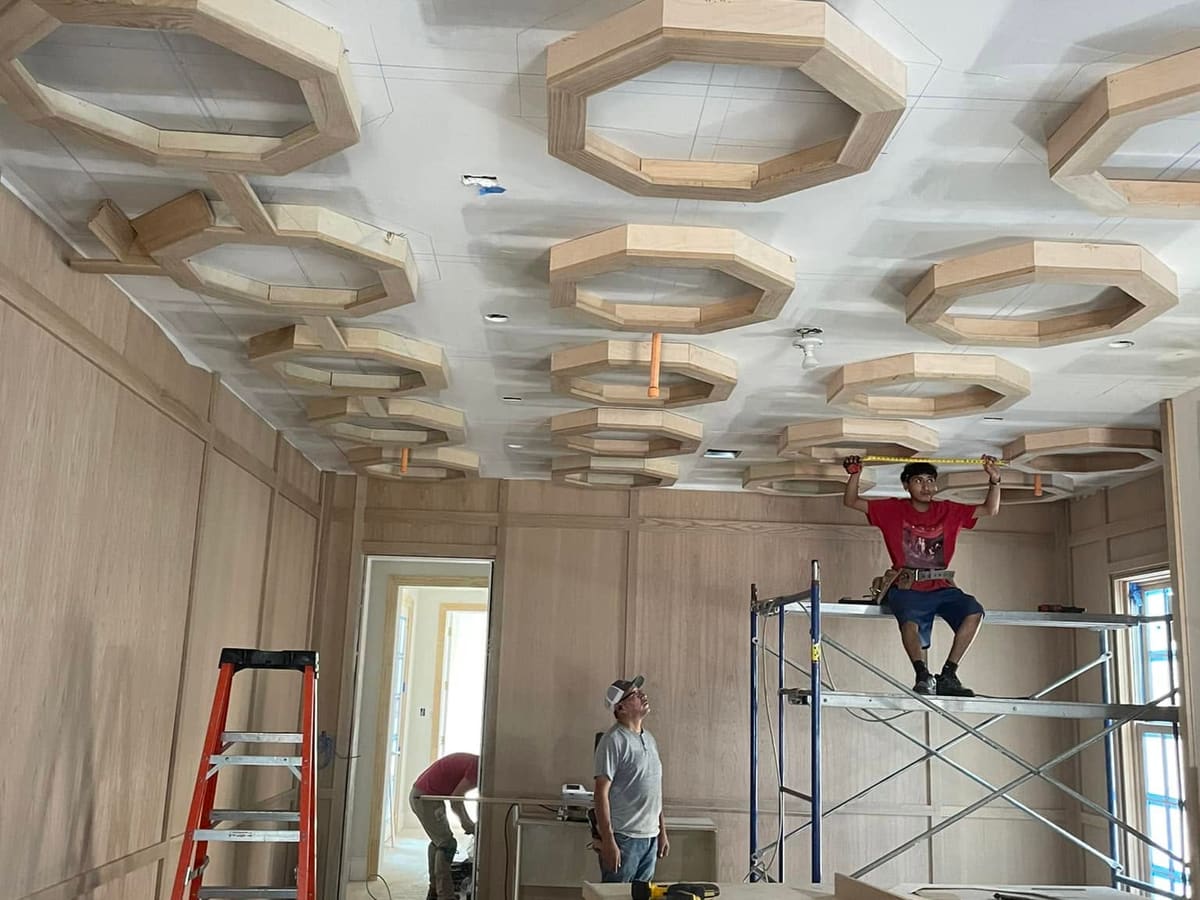
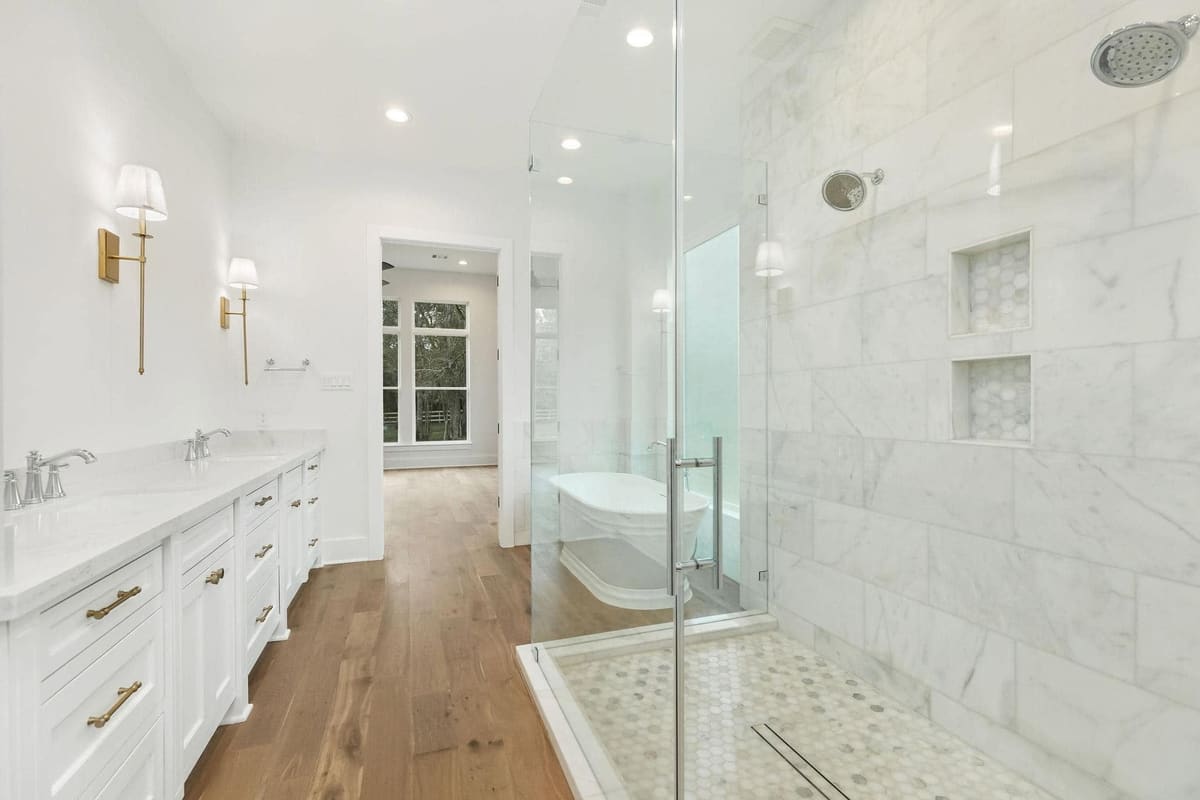
A hardwood installation in progress and finished floors in homes we have built and renovated. Select a photo to see it larger.
Still unsure? Ask us directly and we will answer in plain terms.
Send a few details and we will follow up to schedule a site visit. You get a written, itemized estimate before any work starts.
Tell us what you are planning. We follow up to schedule a site visit.