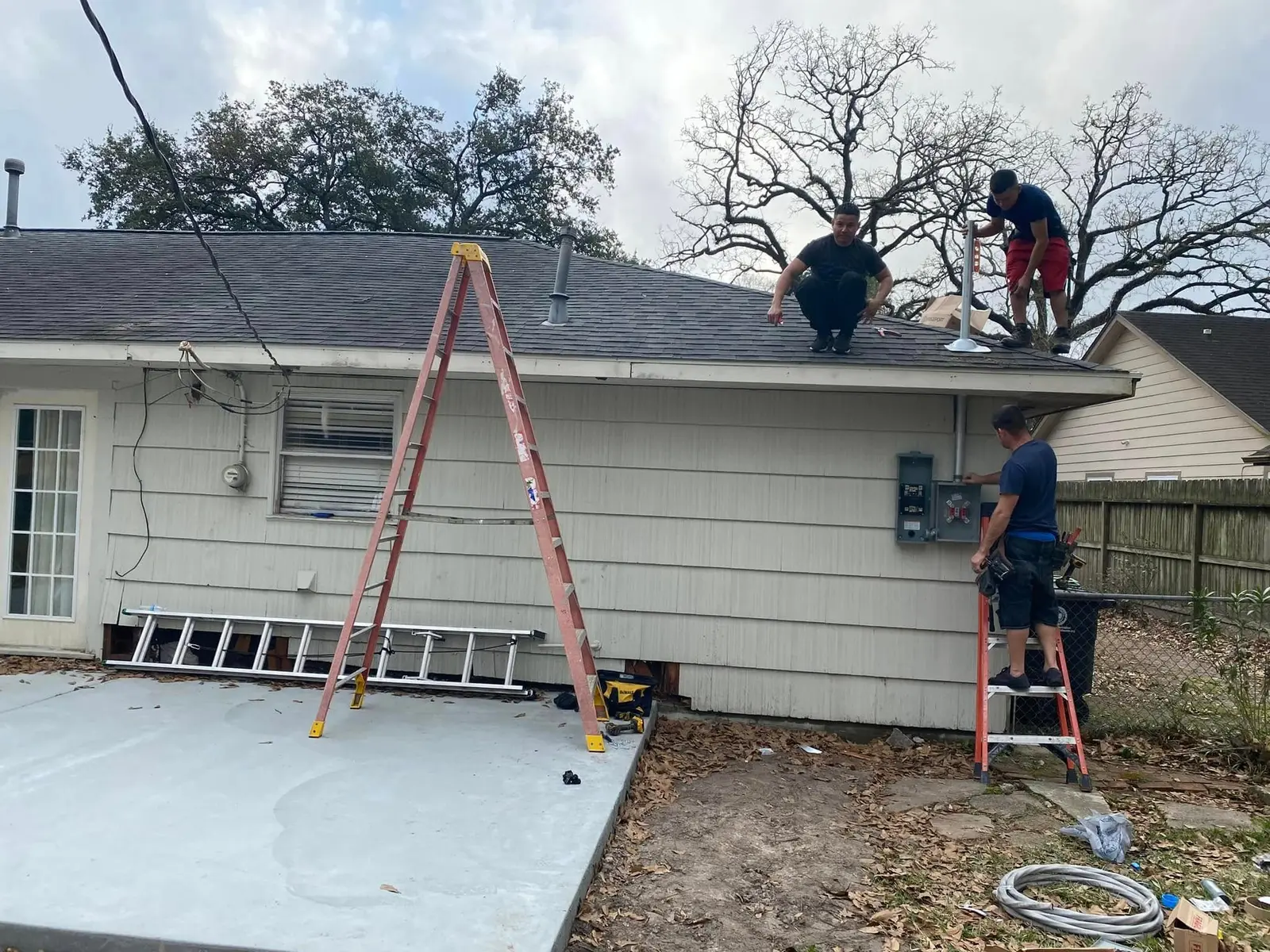
Roof replacement
Tear-off to the deck, replacement of rotted or delaminated decking, new underlayment and flashing, and a new roof: architectural shingles for most homes, or one of the premium systems below.
A roof in Houston has to take heat, hail, hurricane-season wind and months of rain. We replace roofs that have reached the end of their life, repair leaks and storm damage, roof the homes and additions we build, and install premium systems, from standing-seam metal to tile, slate and copper, on residential and commercial buildings, with the decking, underlayment and flashing done right, because that is where roofs fail.
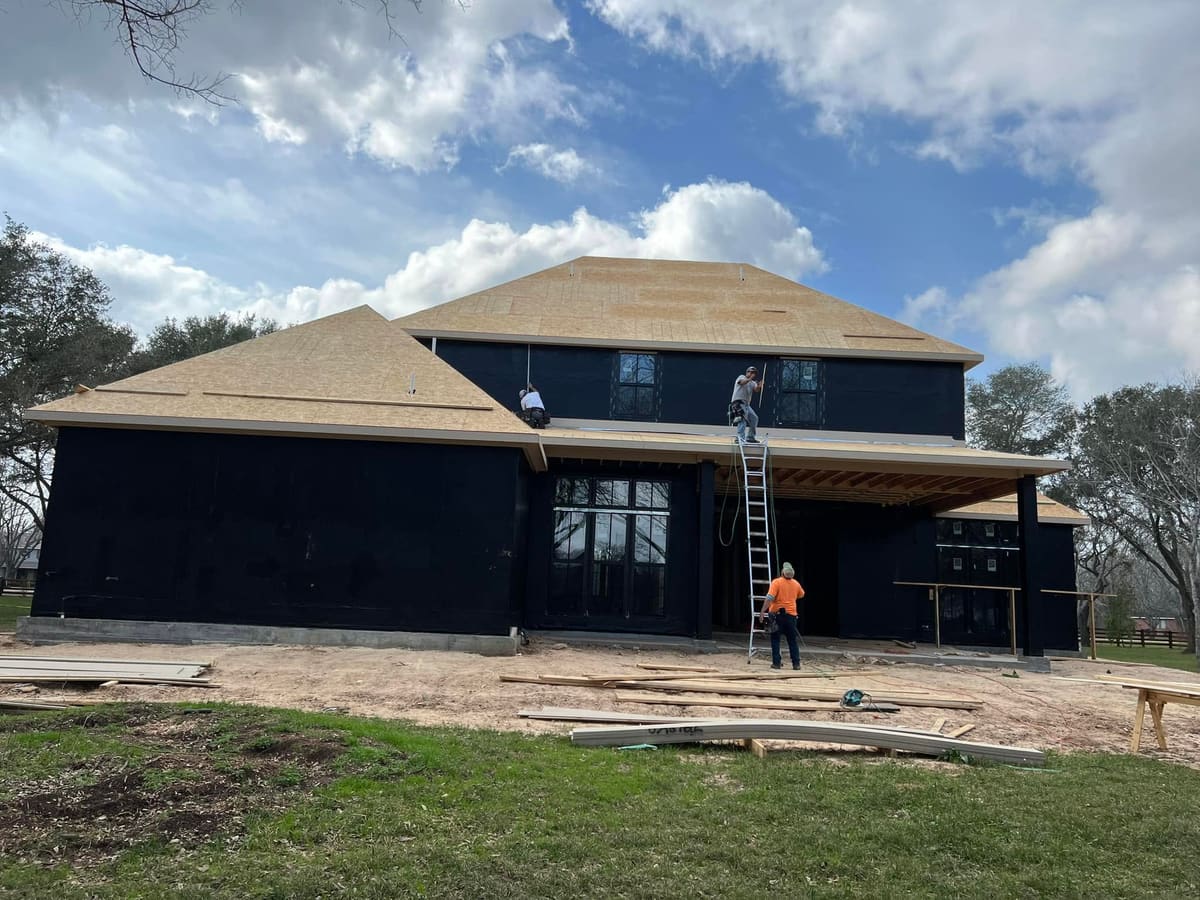
Roofing for houses and commercial buildings, as a standalone roof project or as part of a larger job we are running.
Tear-off to the deck, replacement of rotted or delaminated decking, new underlayment and flashing, and a new roof: architectural shingles for most homes, or one of the premium systems below.
Leaks at flashings, valleys, pipe boots and chimneys; wind-lifted or missing shingles; damage from fallen limbs. We find the source, not just the stain on the ceiling.
Inspection and photos of the damage, temporary dry-in where the roof is open, and repair or replacement with a written scope you can give your insurer.
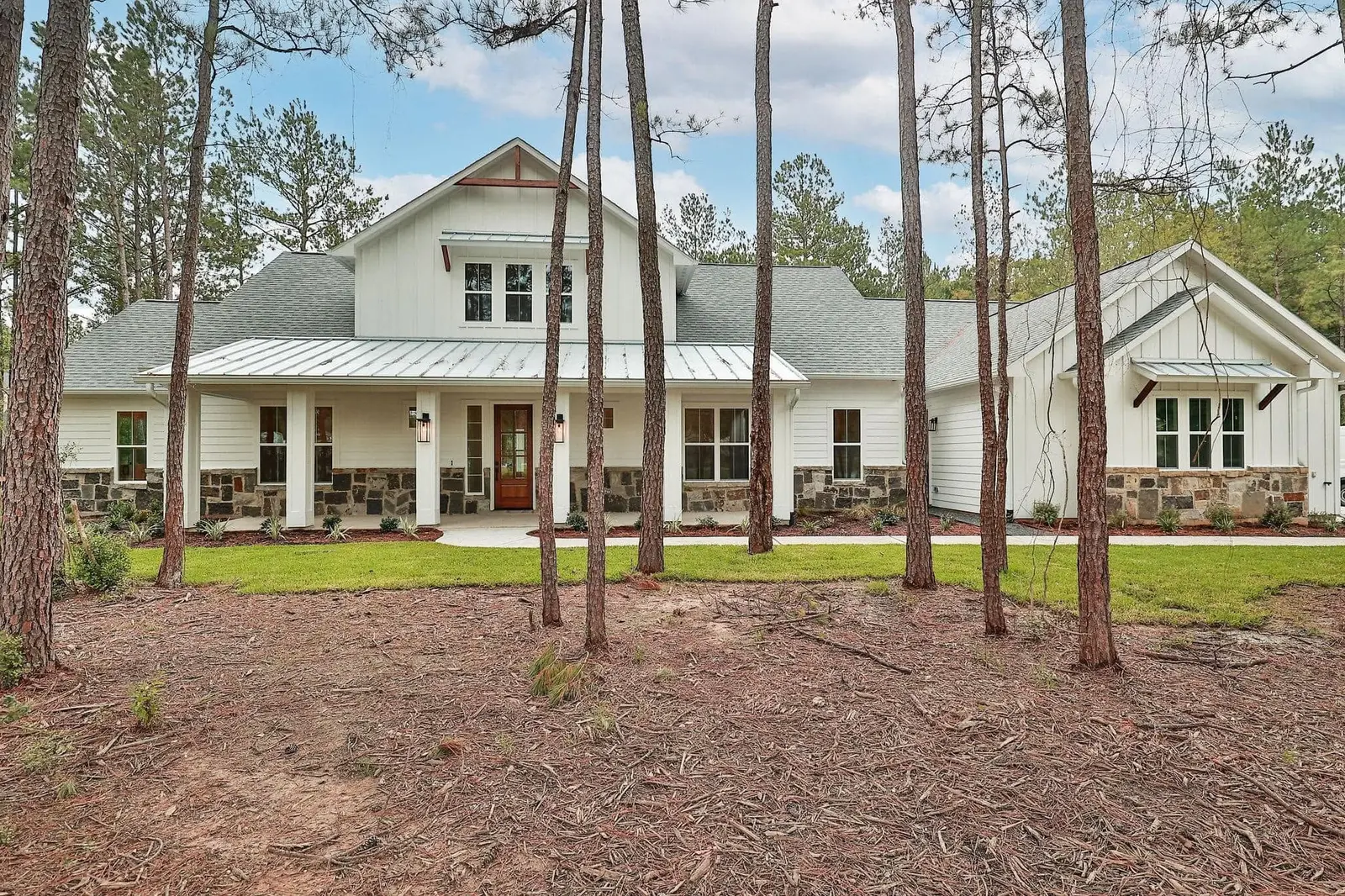
Roofs on the custom homes, additions, porches and patio covers we build, framed, decked and dried in by the same team that roofs them.
Standing-seam metal, clay and concrete tile, natural slate and copper roofing and architectural details, for homes where the roof is part of the architecture. See premium roofing.
Roof installation and replacement on retail, office, warehouse and light commercial buildings, scheduled around your operations. See commercial roofing.
A roof with one failed flashing does not need replacing. A roof with granule loss across every slope, cracked or curling shingles, several patched leaks and decking that gives underfoot does. After an inspection we tell you which it is, with photos from the roof, so you can decide with the facts in front of you.
Age matters less than condition. Houston sun shortens the life of asphalt shingles, hail bruises them, and a roof that has already been layered over once has to come off completely. If the fascia, siding or trim below the roofline is failing too, it is usually cheaper to deal with it while the crew and the access are already there; see exterior renovation.
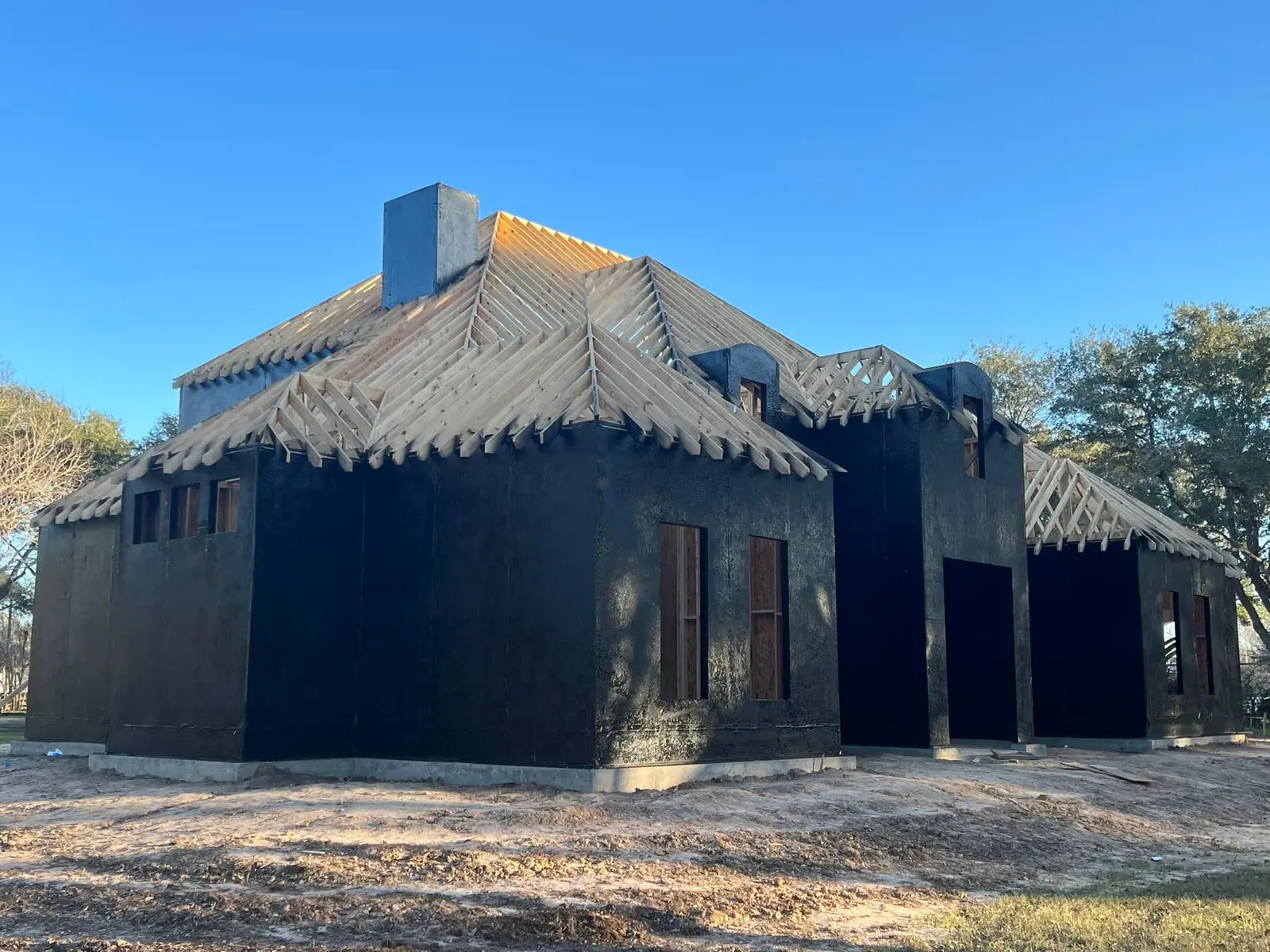
On the homes we build, the roof is designed with the framing: pitch, overhangs, valleys, dormers and ventilation are settled on the plans, and the decking, dry-in and roofing are scheduled as one sequence so the house is weather-tight before interior work starts. On an addition, the new roof has to tie into the old one without a leak at the joint, which is where most addition roofs fail. See custom homes and home additions.
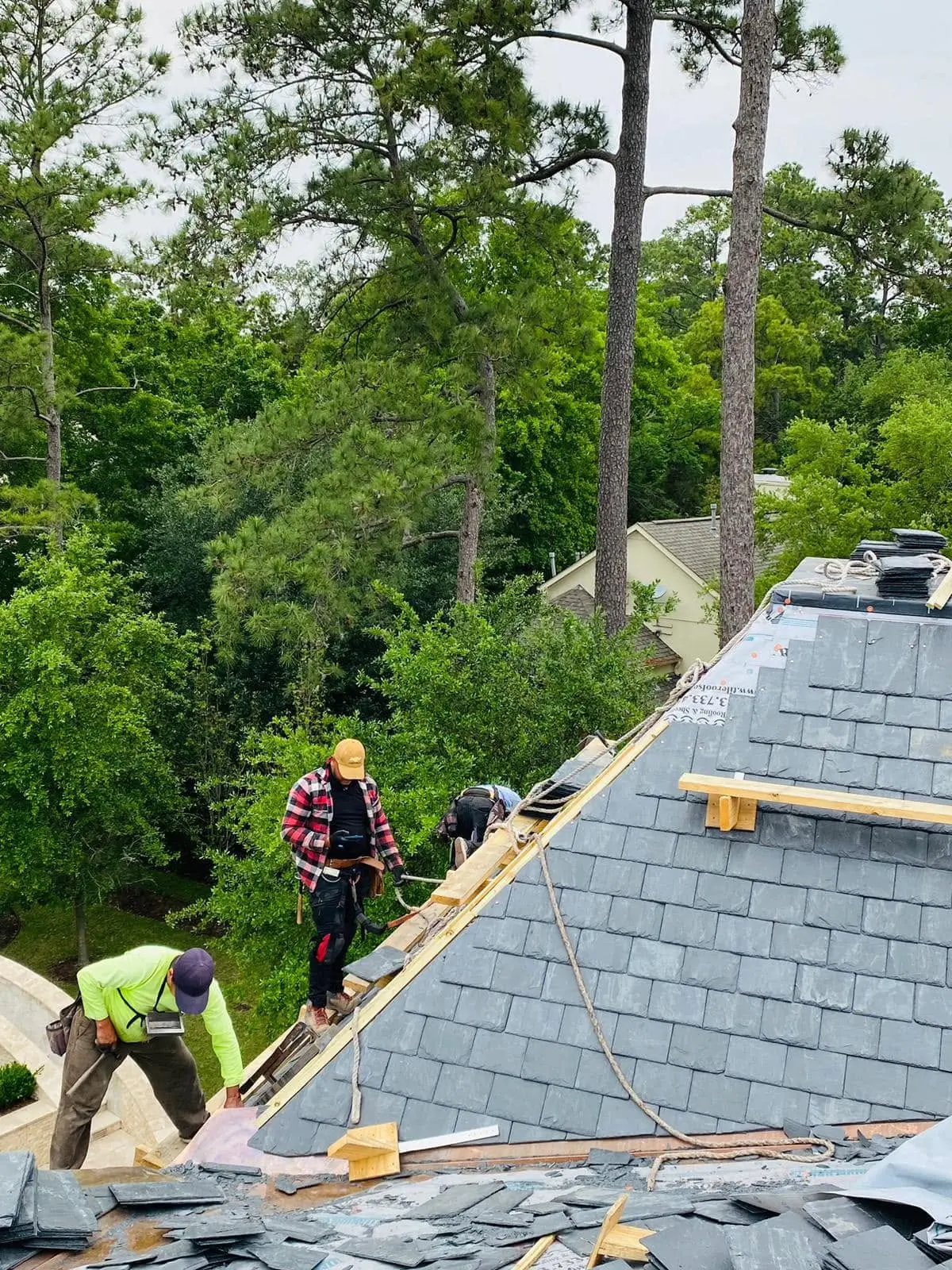
Some homes call for more than a standard shingle roof, and each premium system has its own rules. Standing-seam metal is formed in long panels with concealed clips, so the fastening, expansion and trim details decide whether it stays watertight for decades. Clay and concrete tile is heavy, so the structure, the underlayment and the fastening pattern are checked before the first tile goes on. Natural slate is cut and hung piece by piece, with copper or stainless fasteners and flashings. Copper is used for whole roofs on smaller structures and for the details that finish a premium roof: standing-seam bay and porch roofs, dormers, chimney flashing and gutters.
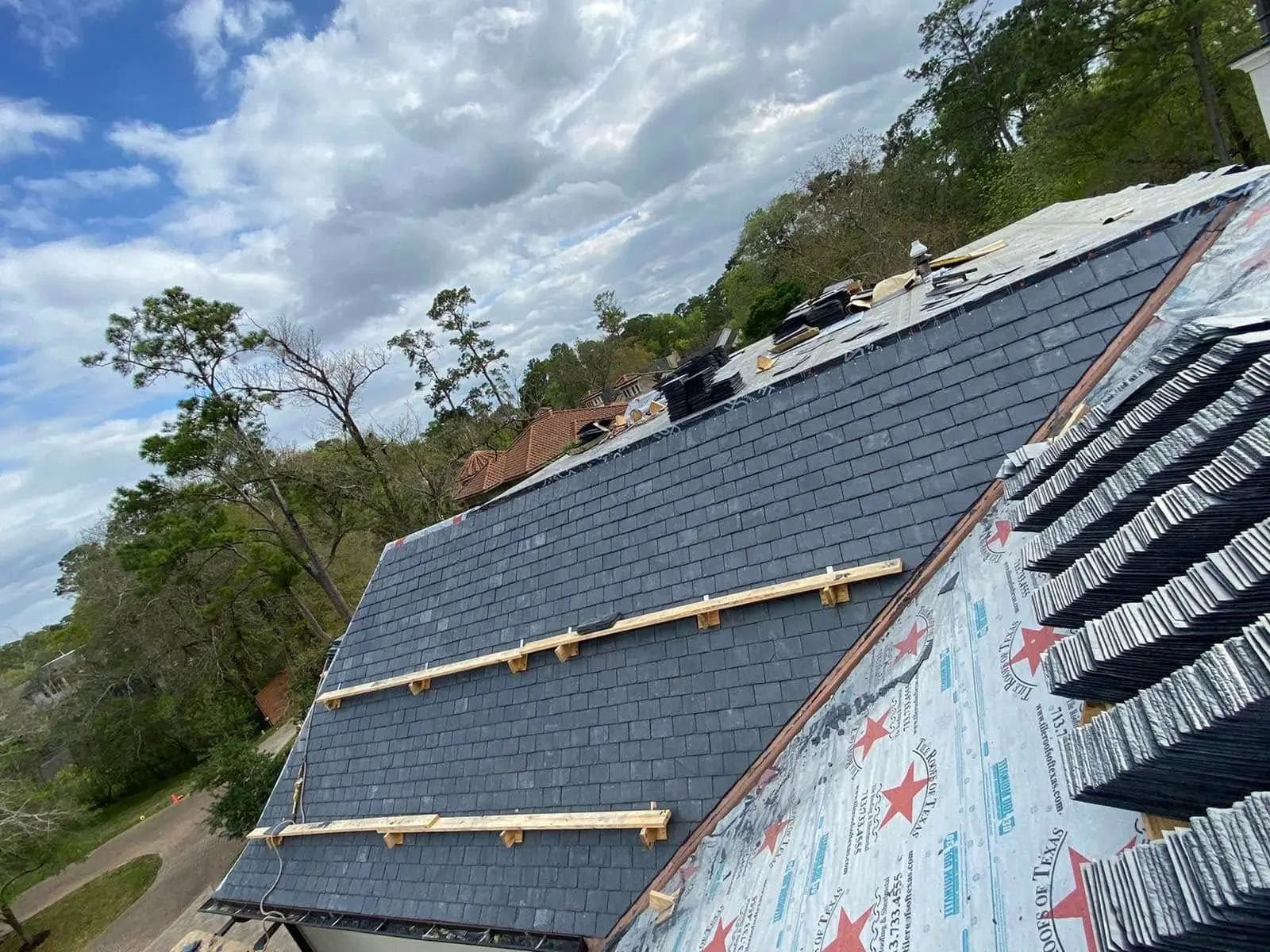
Our lead contractor has installed these systems over years of work with a larger construction company before BP Construction Group, and he supervises and trains our crews on them. BP’s own completed roofs so far are architectural shingle and slate-style shingle roofs, plus the standing-seam porch roofs on the homes we have built, which are the photos you see on this page. Tell us what you have in mind and we will walk you through the system, the details and the price.
We install and replace roofs on retail, office, warehouse and light commercial buildings, as a standalone roofing project or as part of a build-out or renovation we are running. Commercial roofs come with their own requirements: the roof type and the manufacturer’s details, rooftop equipment and penetrations, drainage, safety planning, and work scheduled so the business keeps operating. We review the existing roof, confirm what the building and the city require, and give the owner or property manager a written scope with the material, the schedule and the price. Request a commercial roofing bid.
For a bid, it helps to send what you have: the building address, the approximate age and type of the existing roof, any known leaks and where they show inside, the rooftop equipment, and the hours the building operates. We walk the roof, photograph its condition, the drains, the flashings and every penetration, and note what can be repaired and what has reached the end of its life, so the owner or property manager can decide between repair and replacement on the evidence. Work on an occupied building is planned so that entrances, parking and tenants below stay protected while the roof is open.
Most Houston roofs are architectural (dimensional) asphalt shingles, and this is how we install them. Metal, tile and slate roofs follow their own manufacturer and engineering details for underlayment, fastening and flashing, which we go through with you on those projects.
A roof is priced by its size, its complexity, the material and what is found under the old roofing. These are the main factors.
After a roof inspection we provide a written, itemized estimate, with decking replacement shown as a separate line.
Many Houston-area cities require a permit for a full roof replacement and inspect the decking and underlayment before the roof is covered; unincorporated areas and HOAs have their own rules, and windstorm-designated areas have requirements for the roofing hardware. We check what applies to your address and handle it as part of the job.
We get on the roof, photograph every slope, flashing and penetration, and check the attic for leaks and ventilation.
Replace or repair, with the material, the scope and decking replacement priced as its own line.
Permit where the city requires one, materials ordered, and a start date set around the weather.
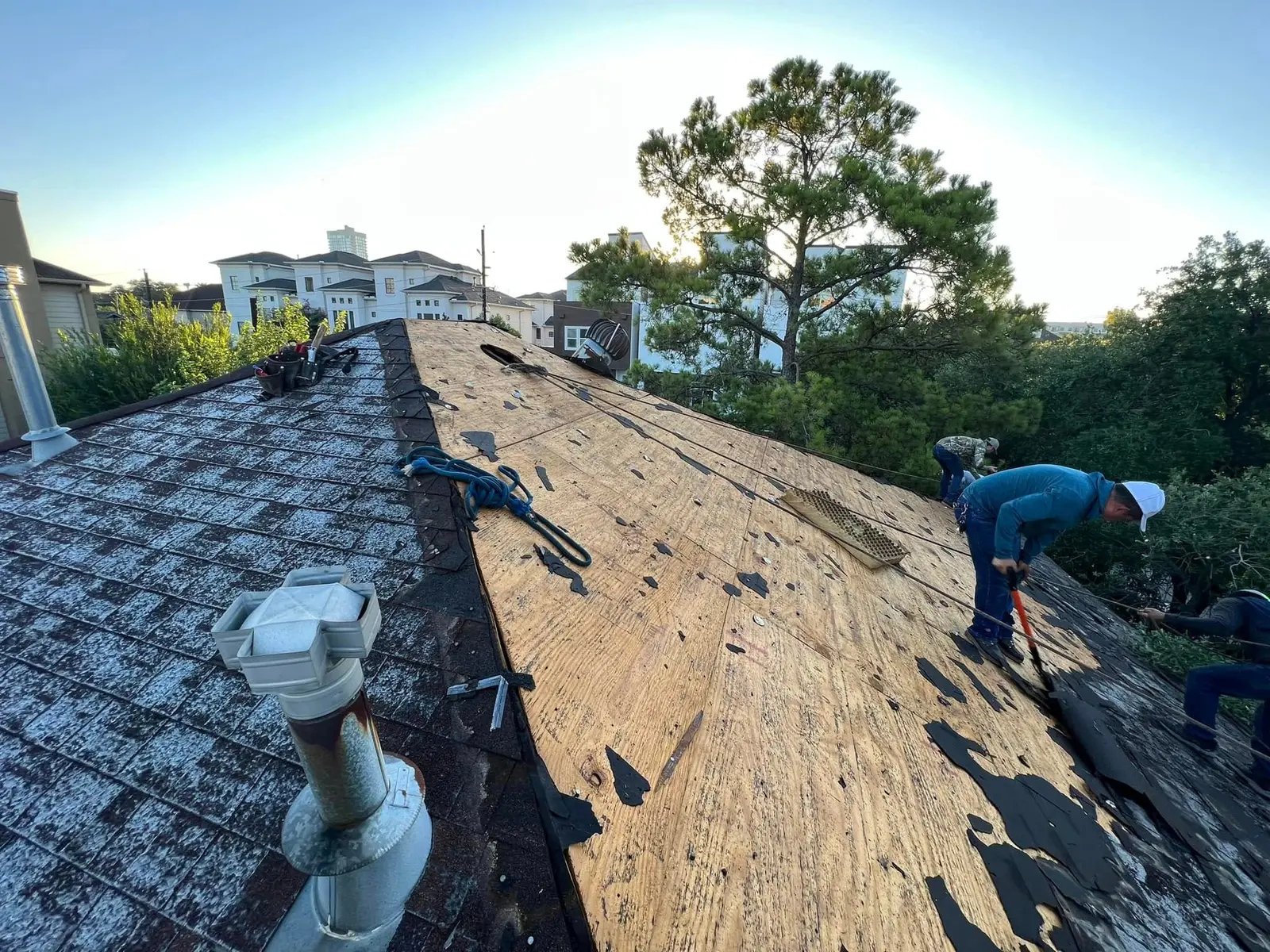
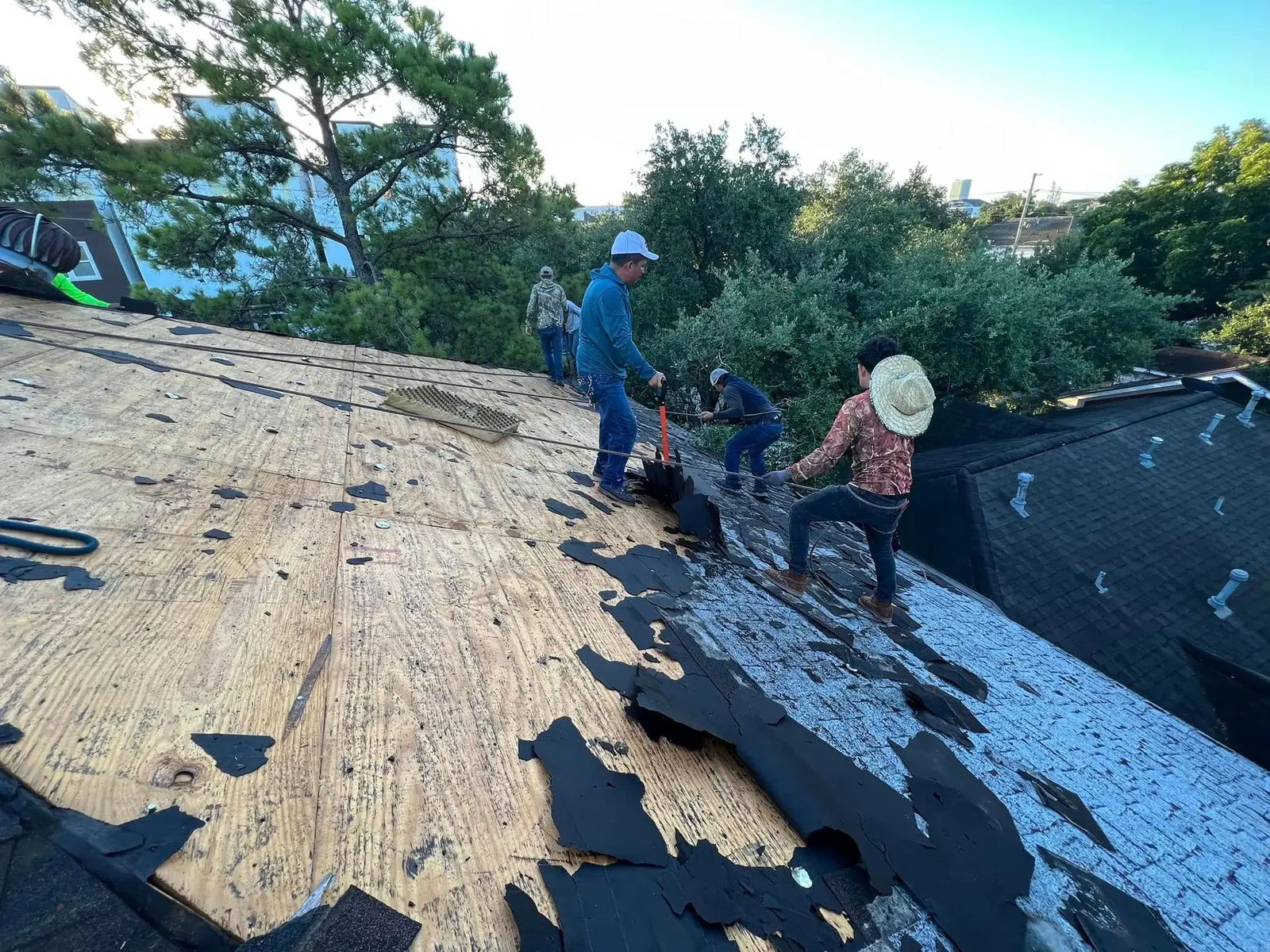
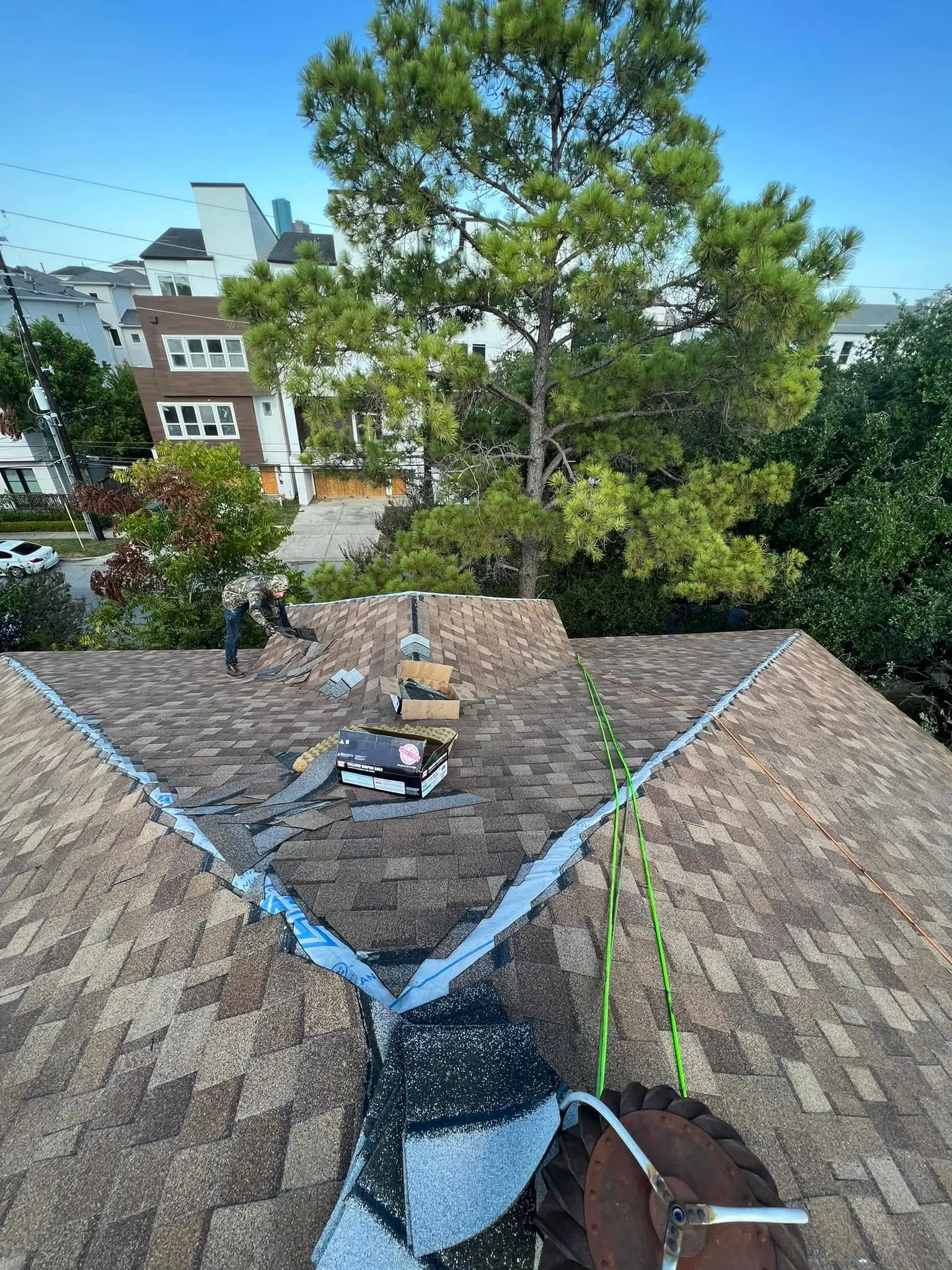
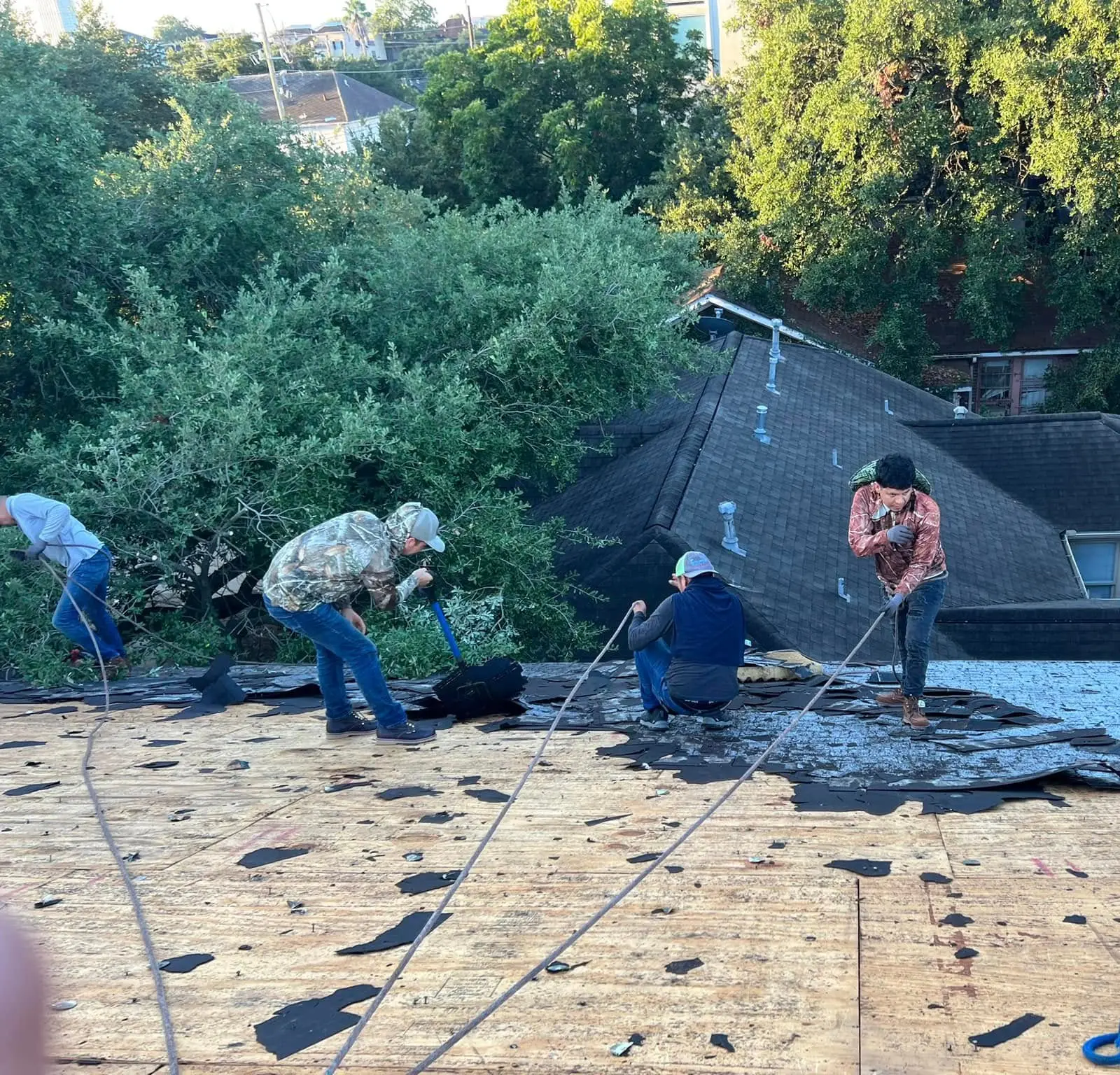
Old roofing off to the deck, soft decking replaced, the deck swept and checked.
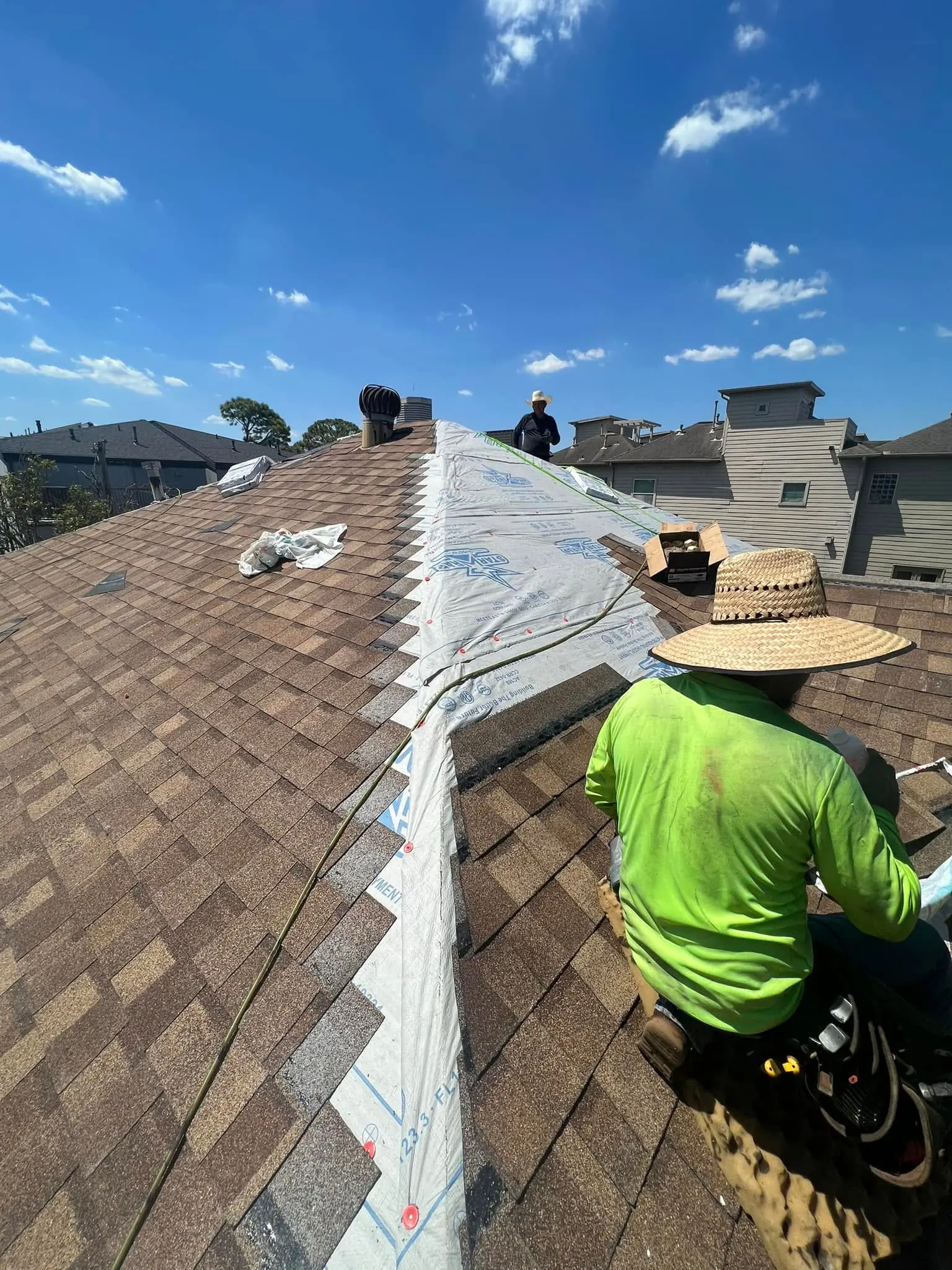
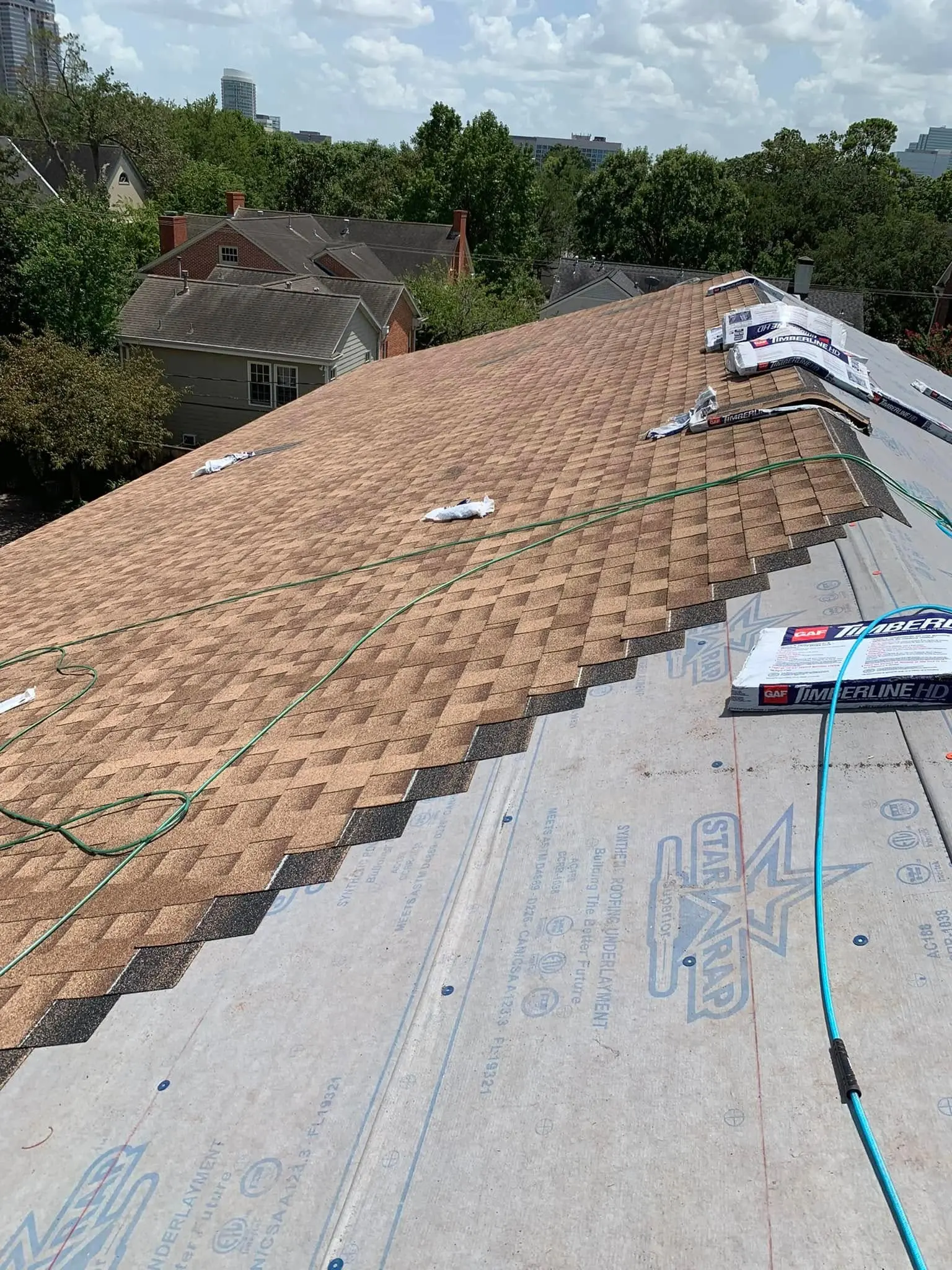
Ice-and-water shield, underlayment, flashing, then the new roof, ridge and ventilation.
Inspection, a magnet sweep for nails, haul-off, and photos of the finished roof for your records.
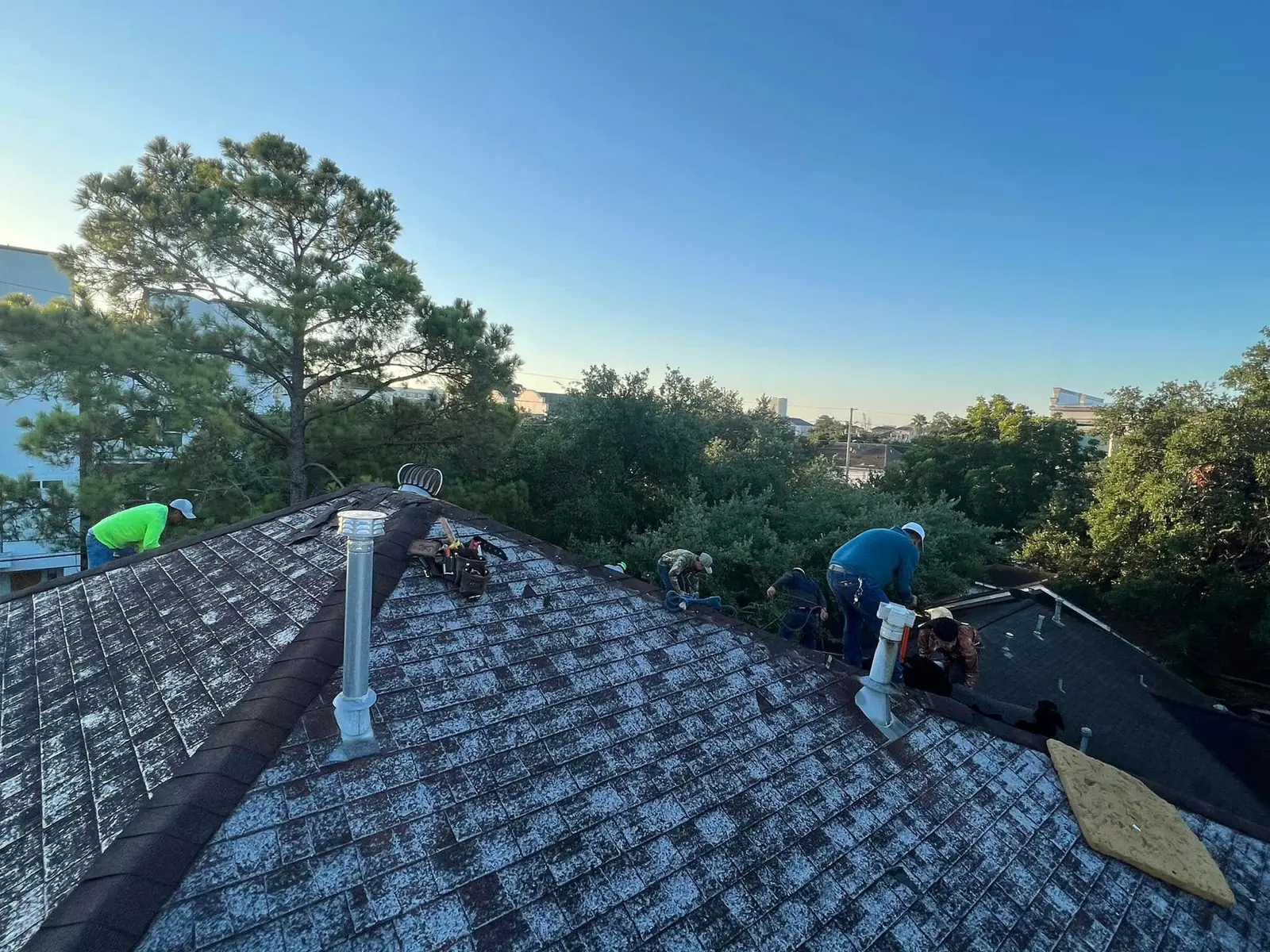
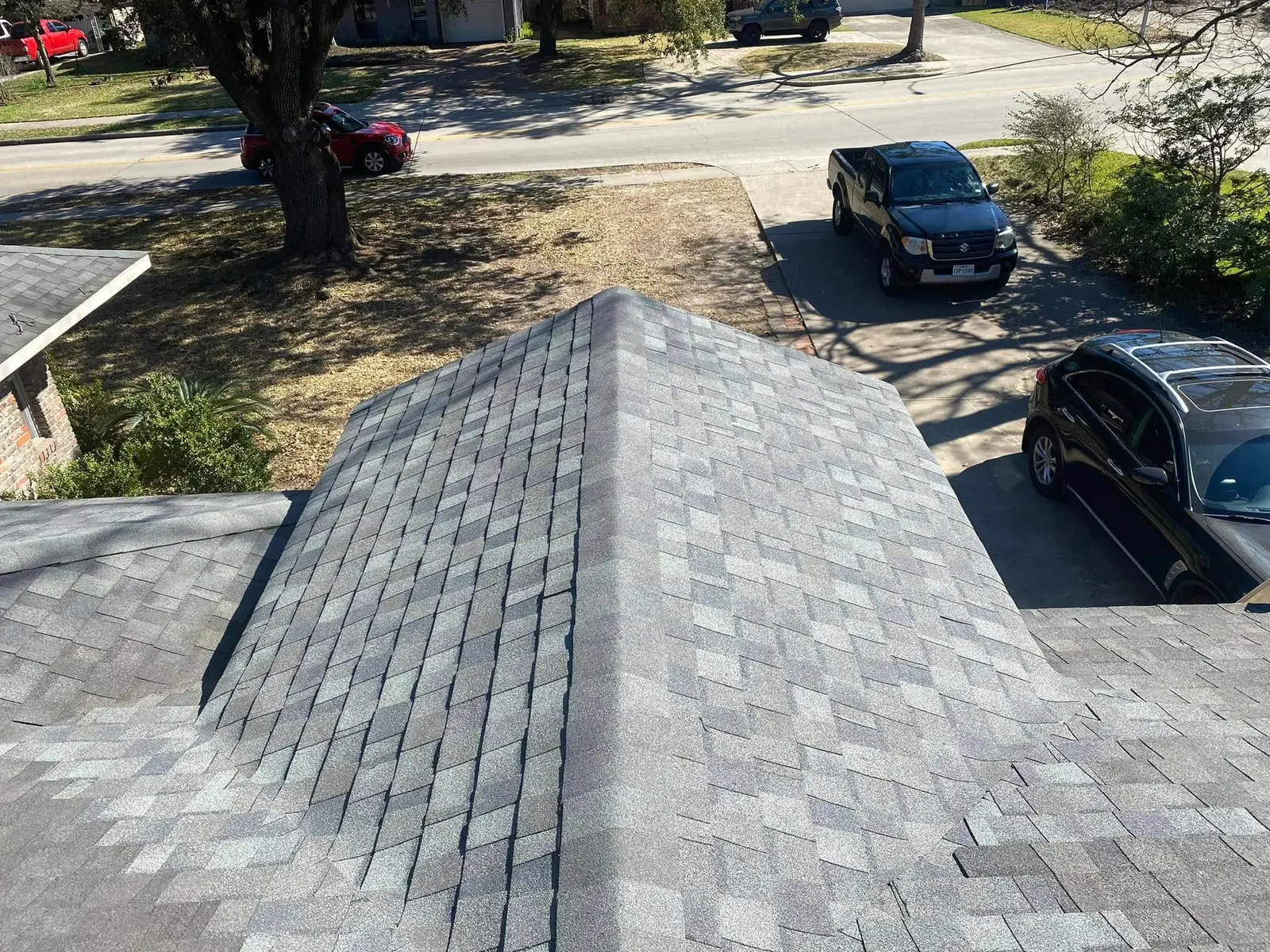
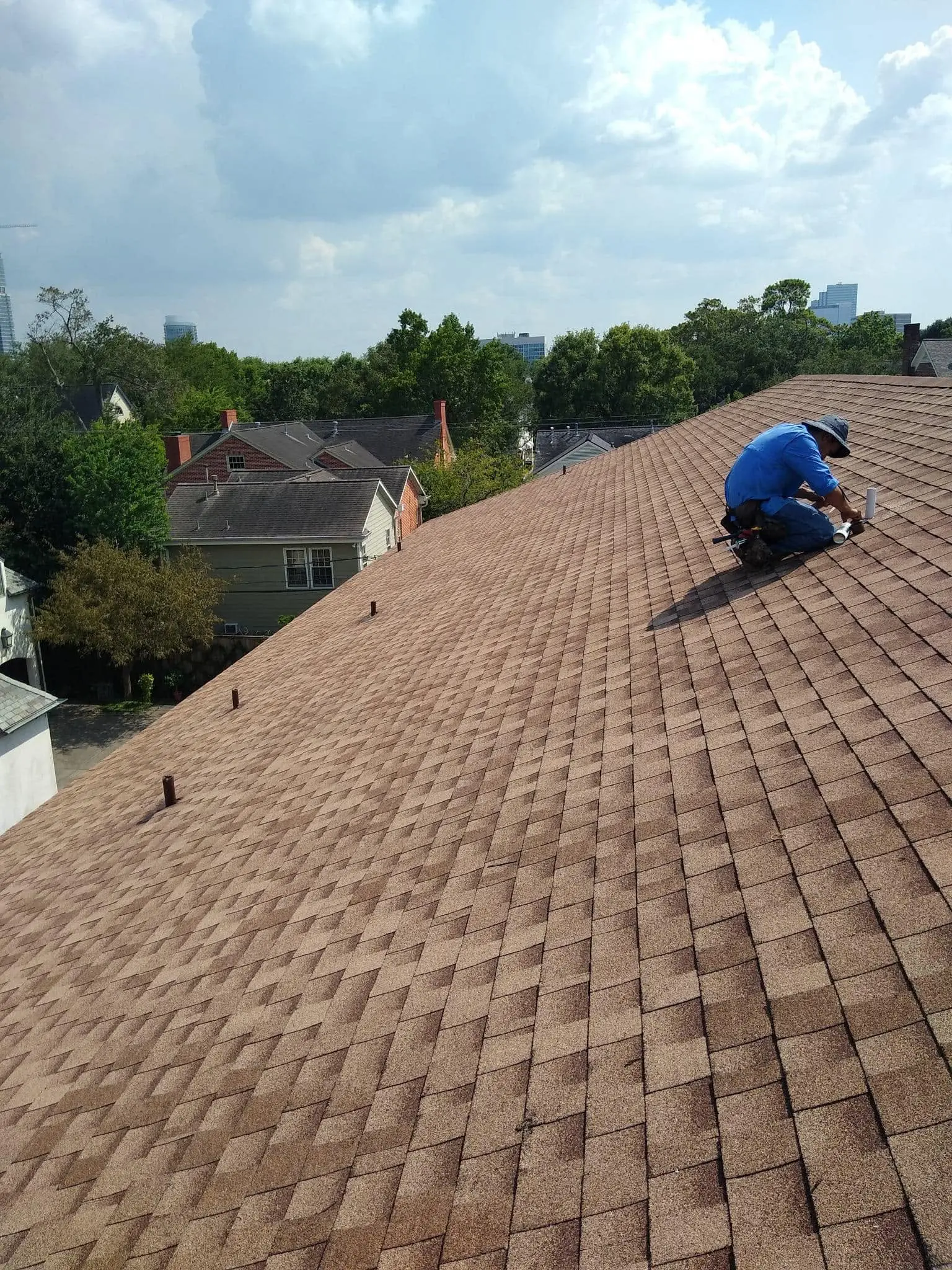
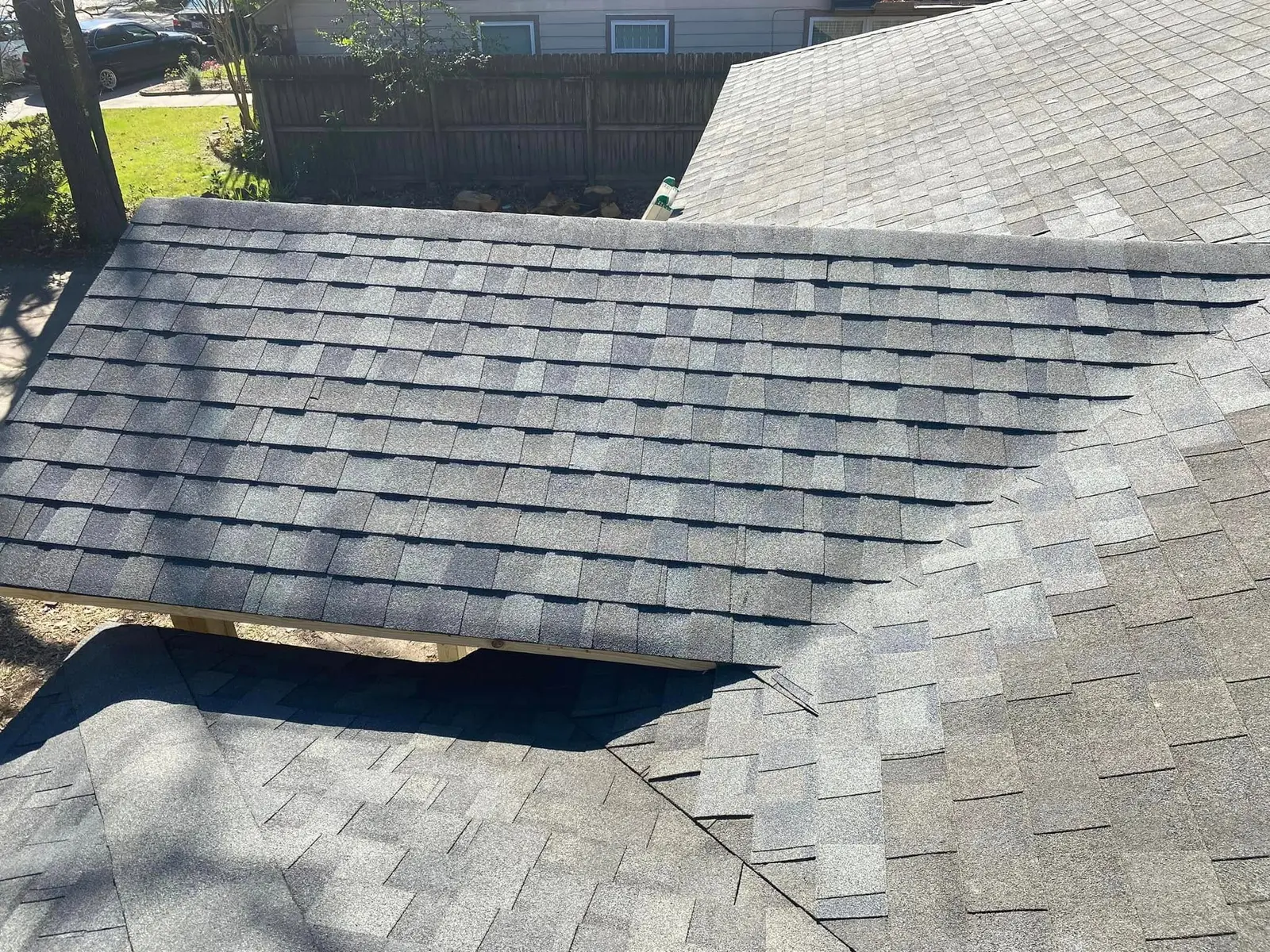
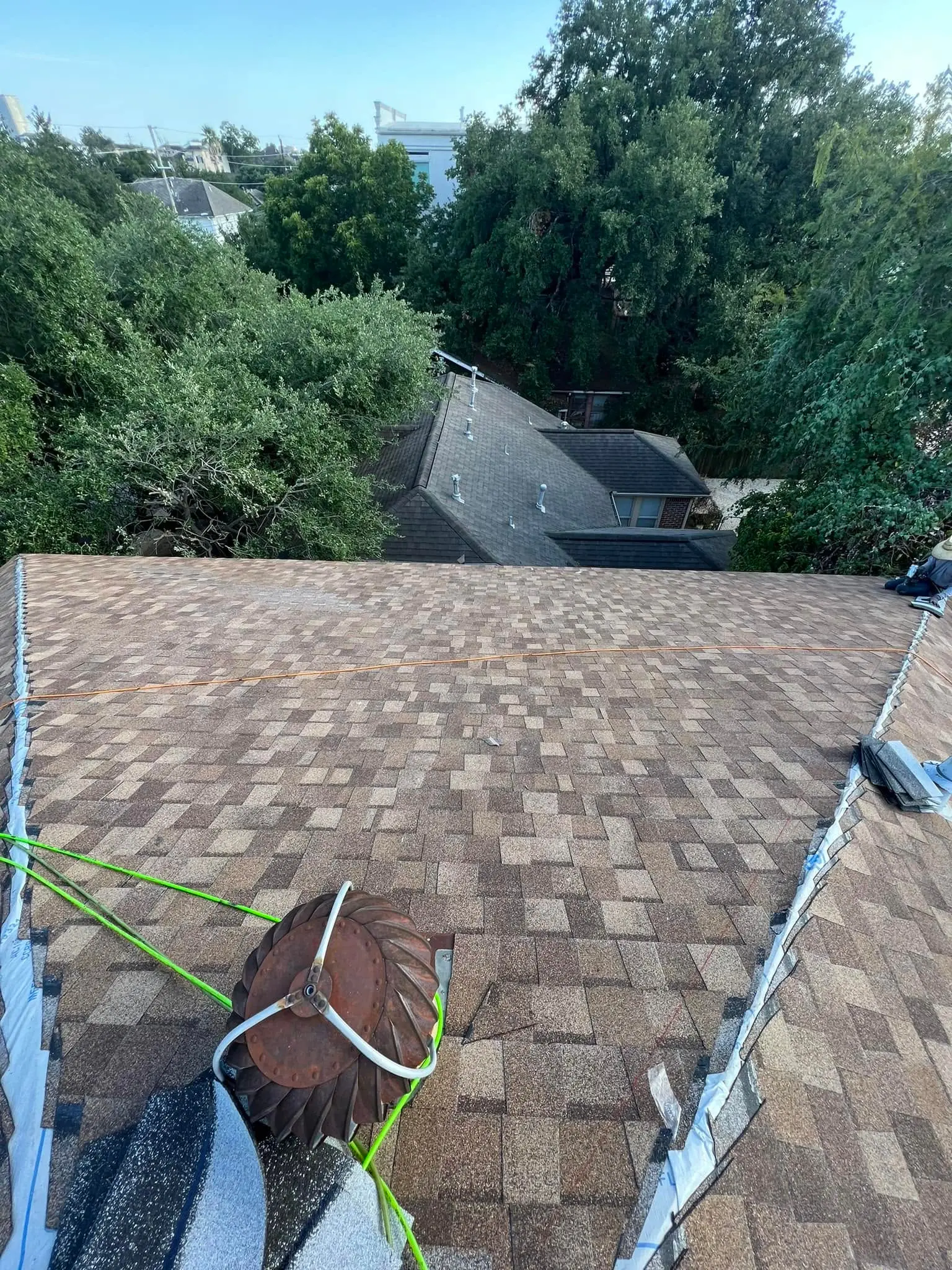
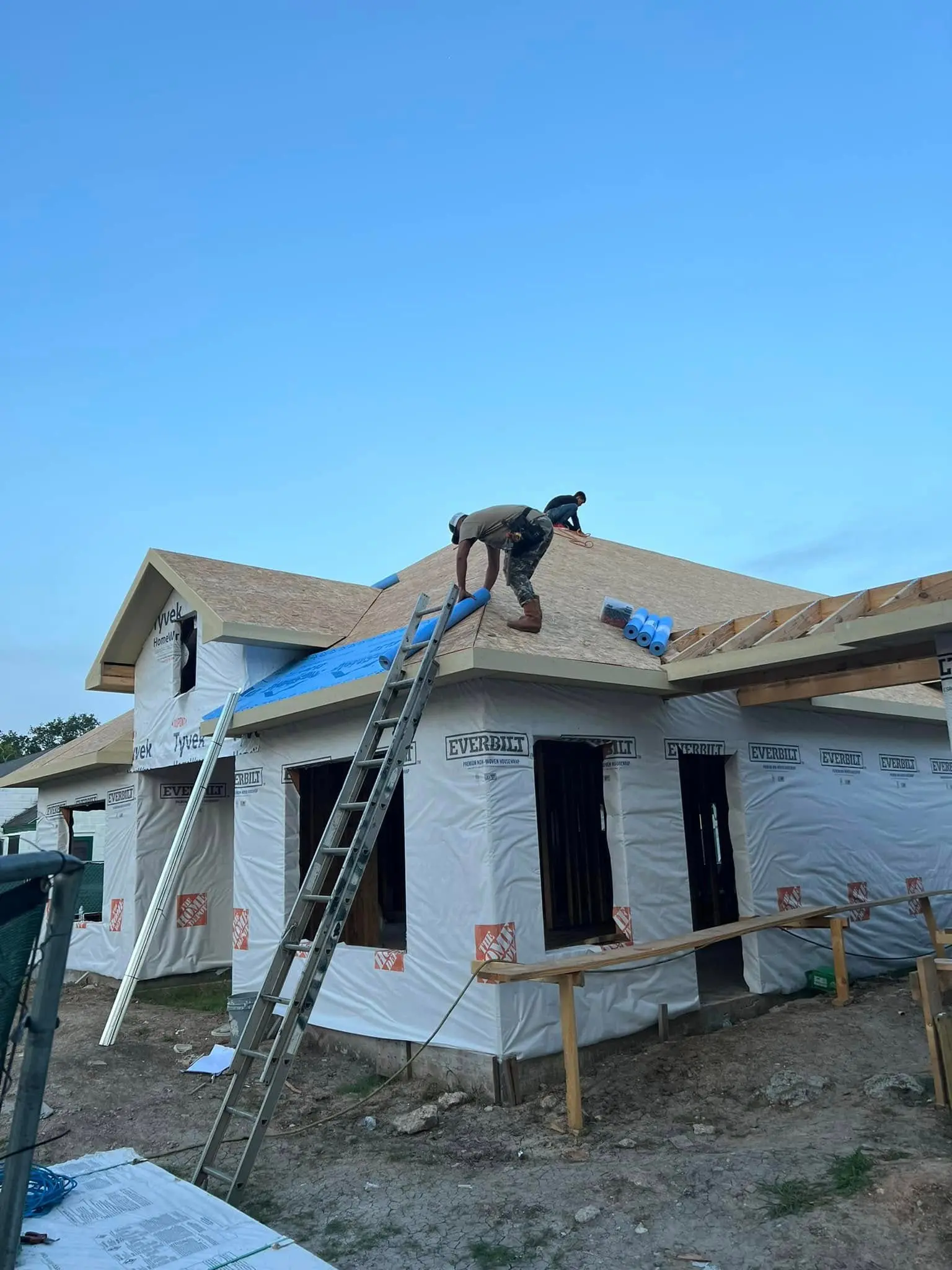
Tear-offs, underlayment, shingle and slate-style installations, and finished roofs on Houston-area homes. Select a photo to see it larger.
Still unsure? Ask us directly and we will answer in plain terms.
Send a few details and we will follow up to schedule a site visit. You get a written, itemized estimate before any work starts.
Tell us what you are planning. We follow up to schedule a site visit.