Land clearing, site preparation and demolition for building lots in Greater Houston

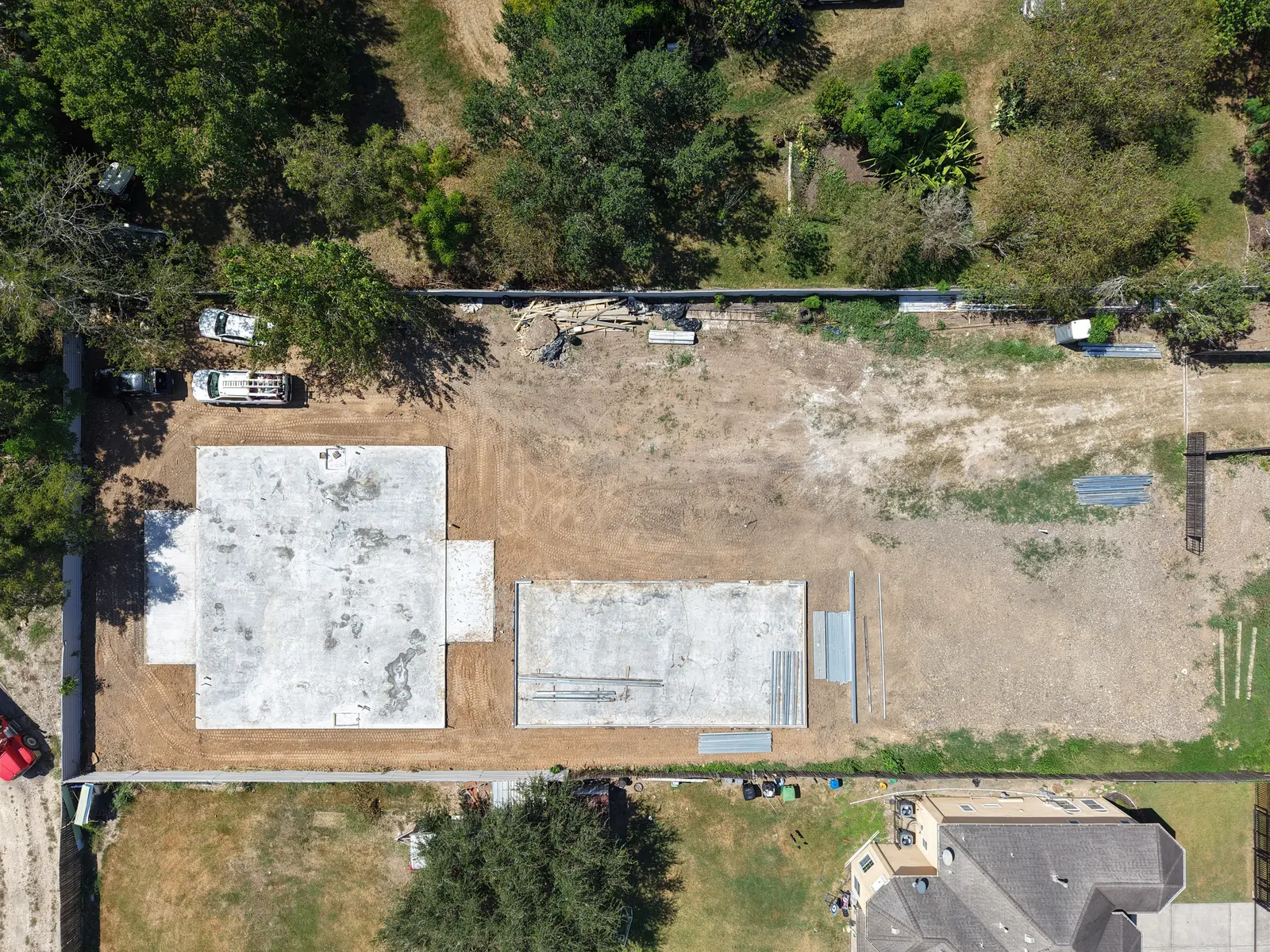
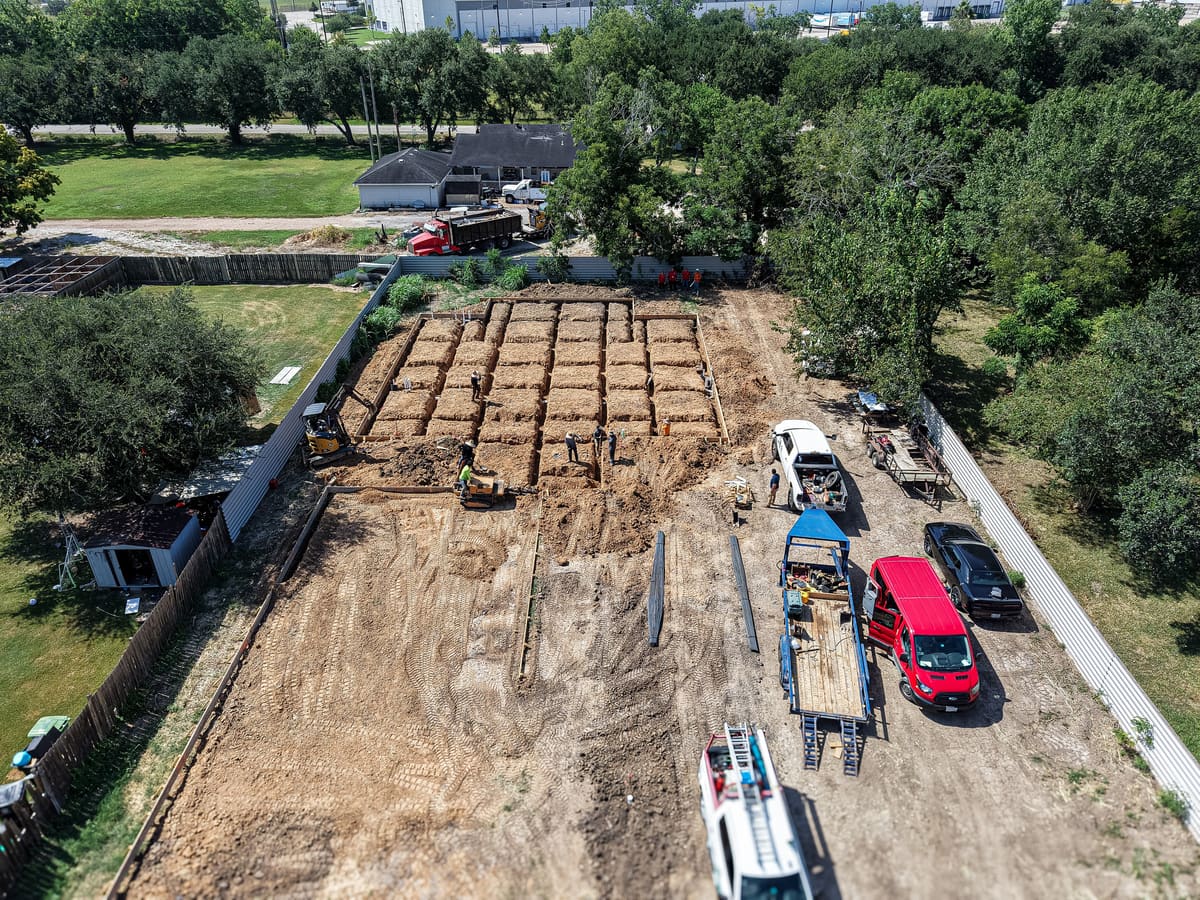
Before a slab can be poured, what is on the lot has to come off it and the ground has to be made ready: the old house or pool removed, the lot cleared, the pad built up and compacted, and the foundation trenched. We prepare the sites we build on, and we take clearing, demolition and pad work as its own job for land owners, homeowners and builders.

  • Lot clearing, demolition of houses and structures, and pool removal
  • Rough grading, fill and compacted building pads
  • Planned by a builder, so the site is ready for the foundation that follows
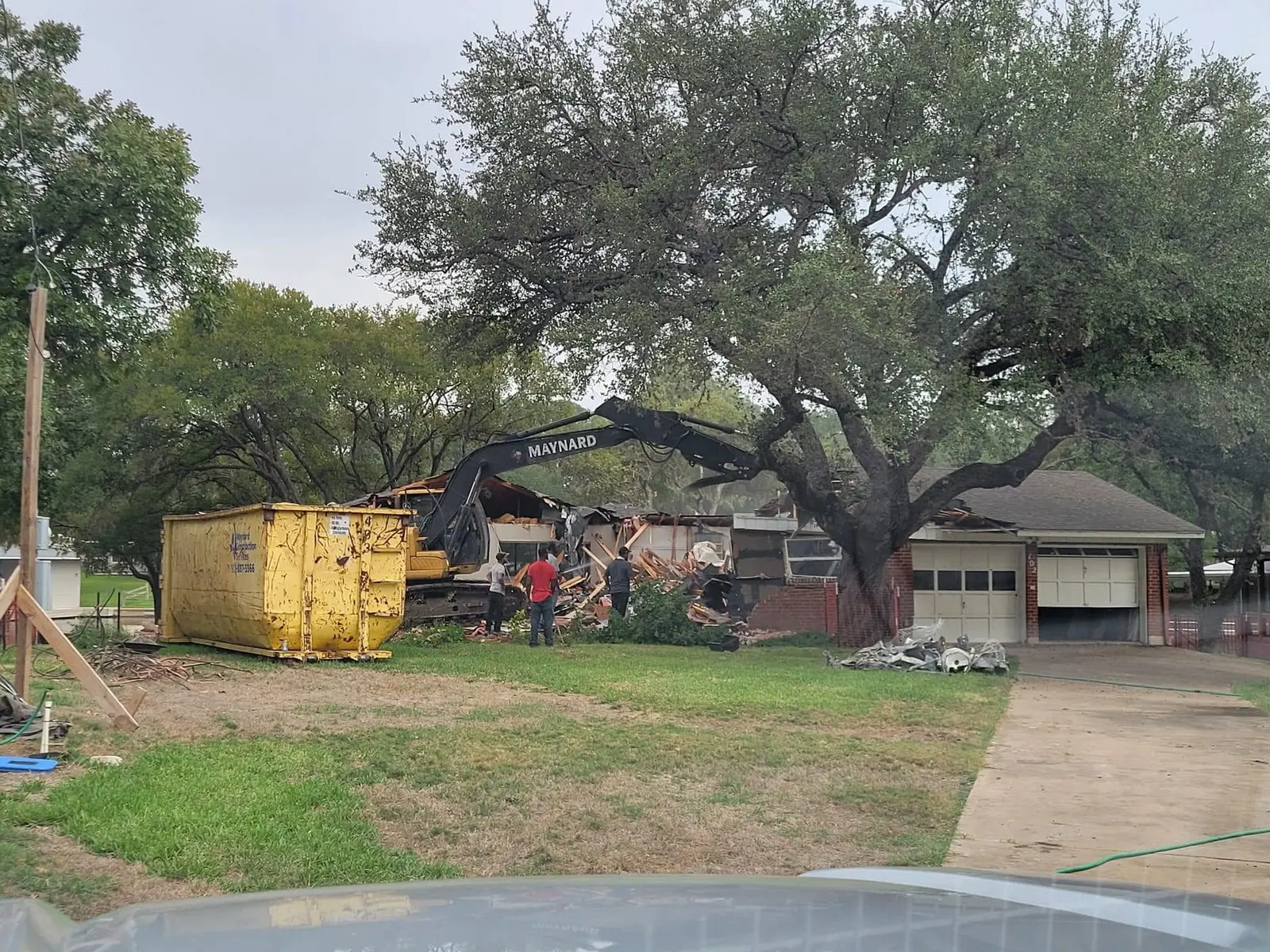
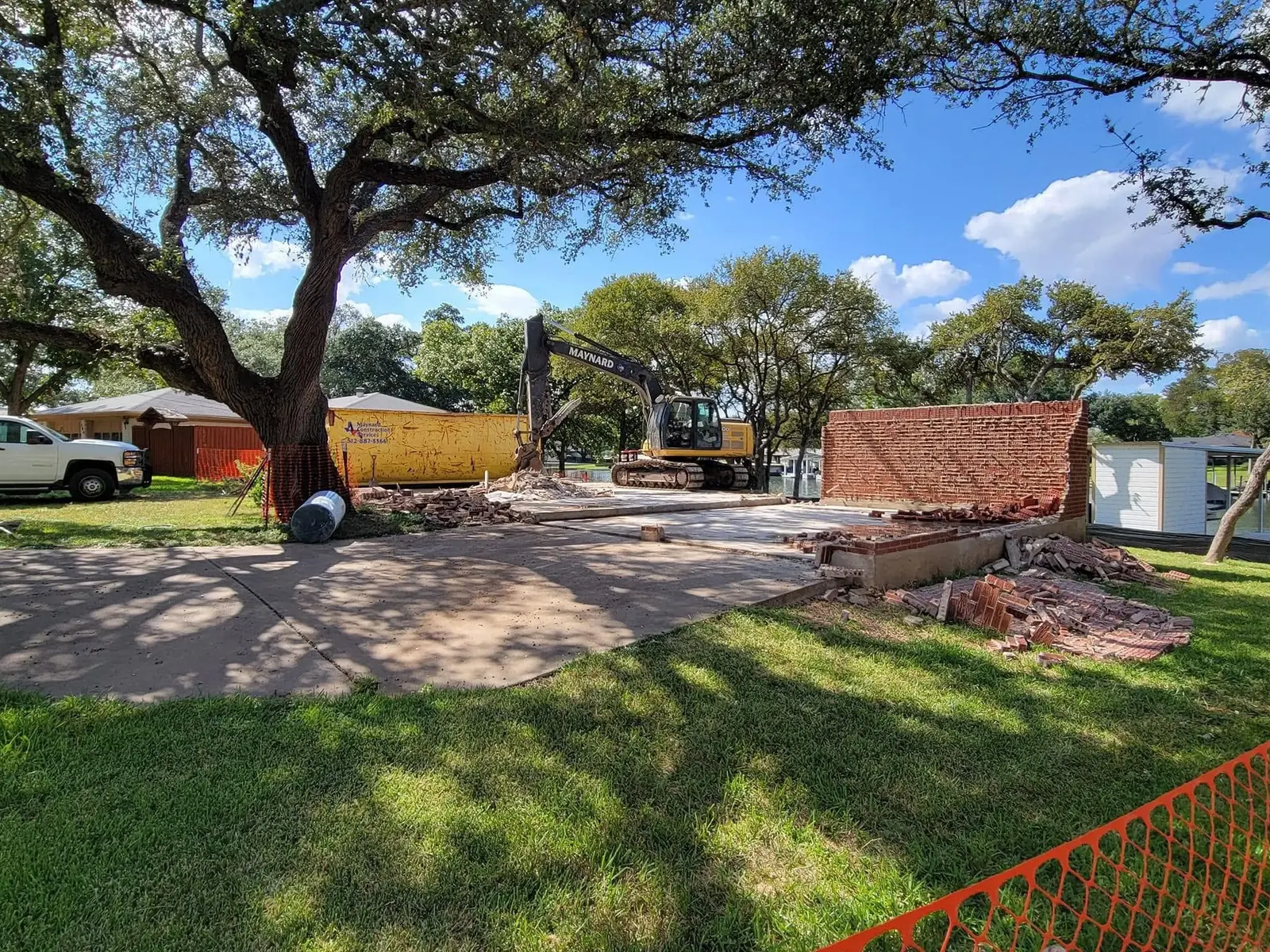
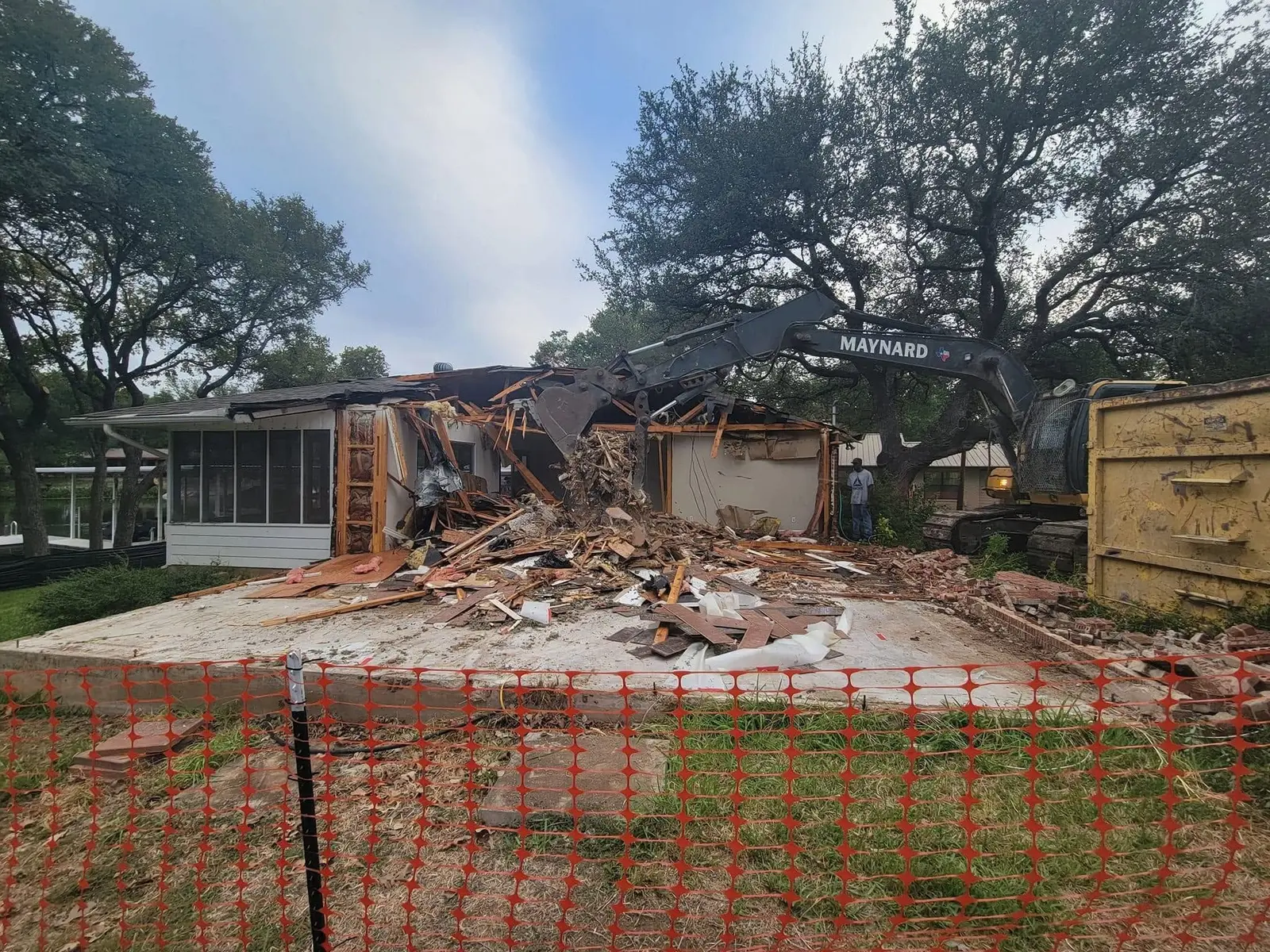
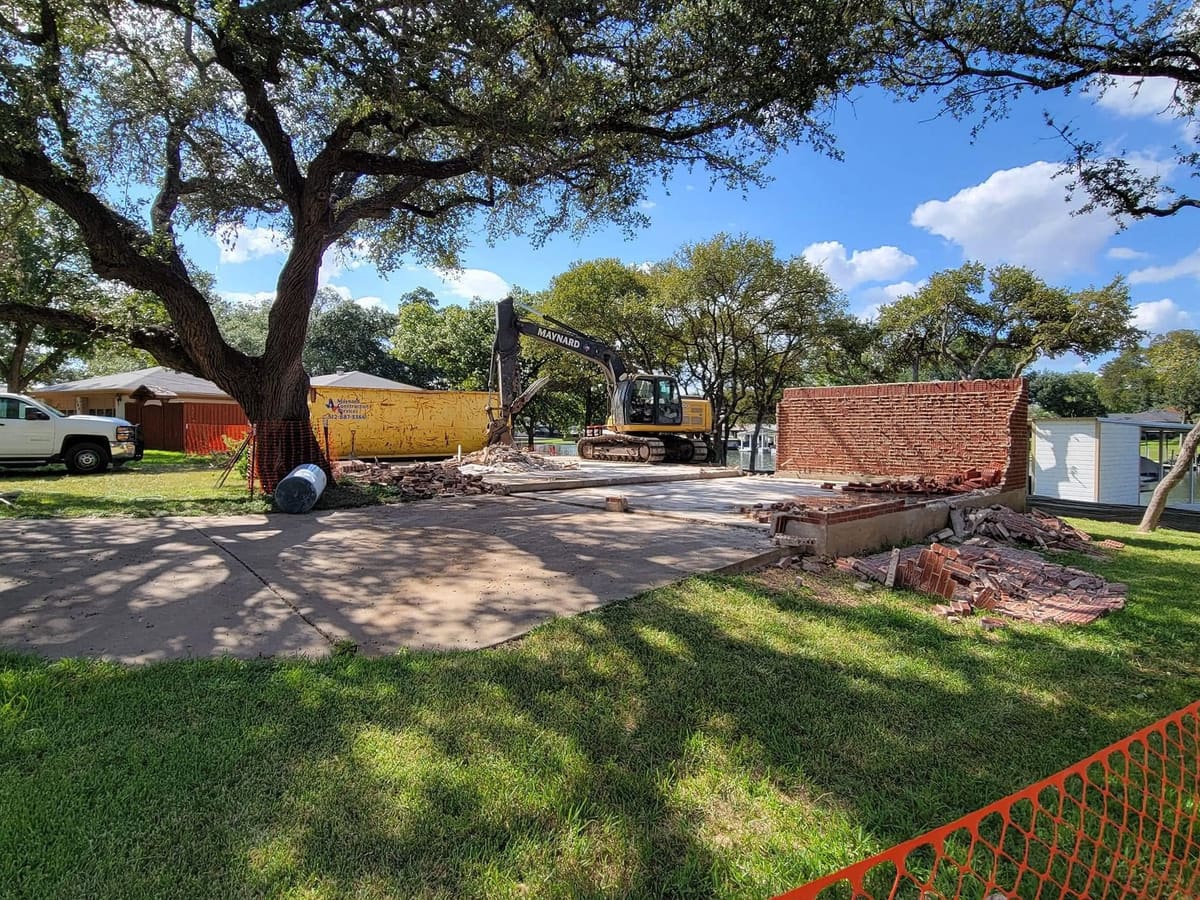
Excavator and roll-off container on a lot where an old house is being taken down, beside a live oak

What we do

Site work is done by our crews and by demolition and earthwork contractors we work with, under one contract with us.

Lot clearing and grubbing

Brush, undergrowth and the trees that have to go are taken down, stumps and roots are grubbed out of the building area, and the debris is hauled off. The trees you want to keep are marked and fenced before equipment arrives.

Demolition of houses and structures

Complete demolition of a house, garage, shed or small commercial structure: utilities disconnected and permits in hand first, then the structure taken down, the slab and driveway broken out if they are going, and everything loaded and hauled away.

Pool removal and backfill

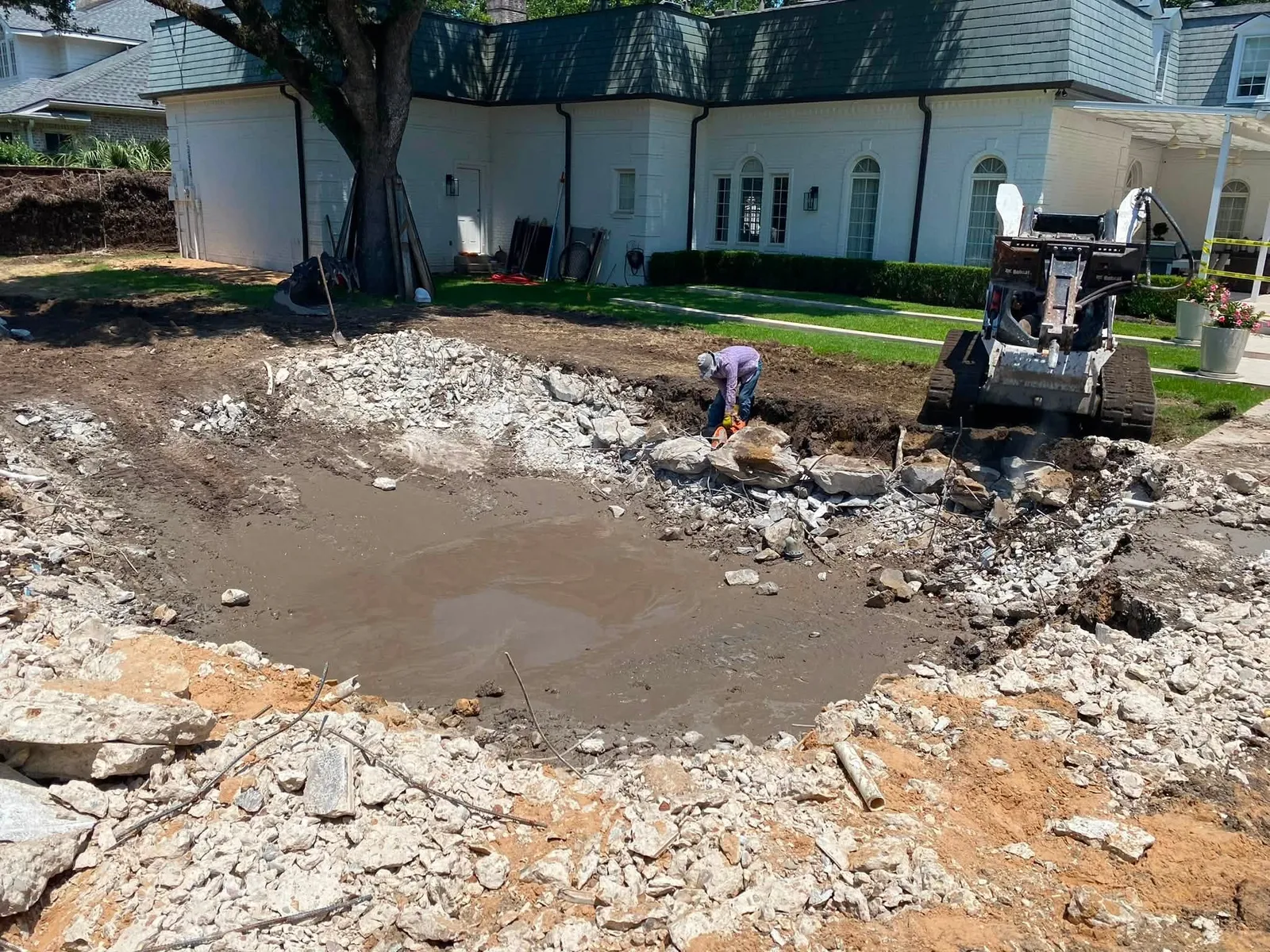
In-ground pools broken out and removed, the excavation backfilled in compacted layers, and the yard graded so it drains. See the pool removal photos below.

Rough grading and building pads

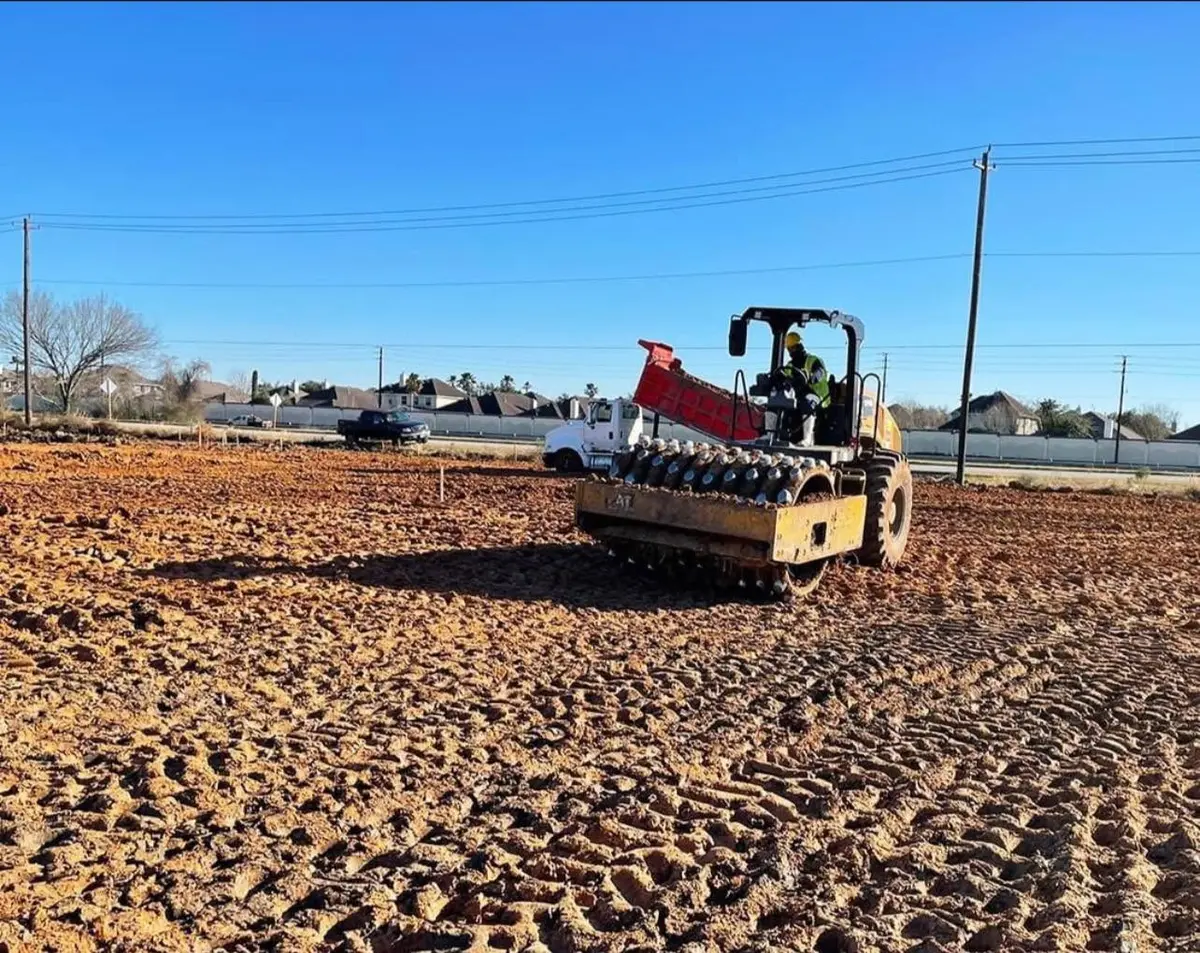
Cutting and filling the lot to the elevations on the plan, importing select fill where the pad has to be raised, and compacting it in layers so the foundation sits on ground that will not settle.

Excavation and trenching

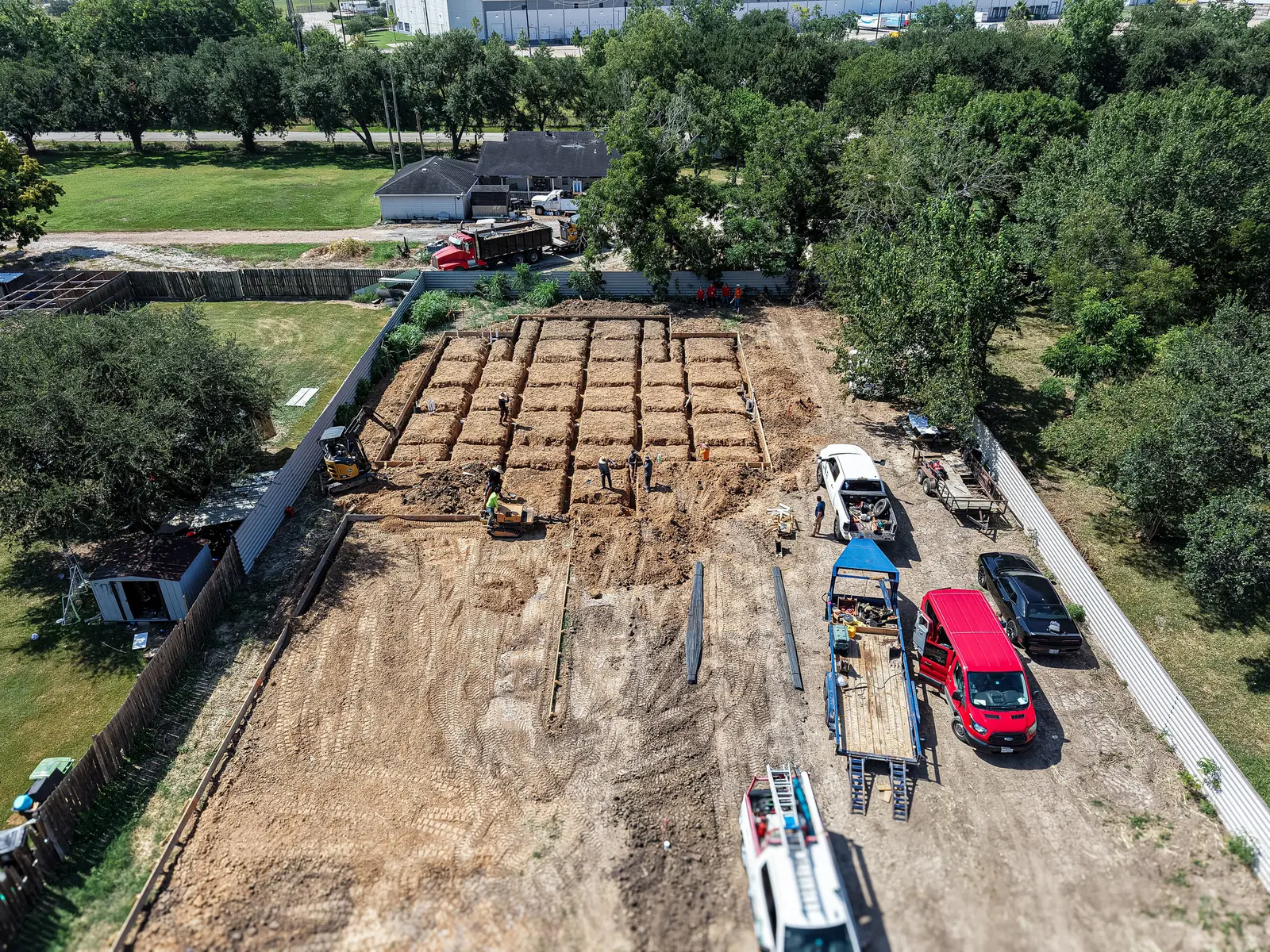
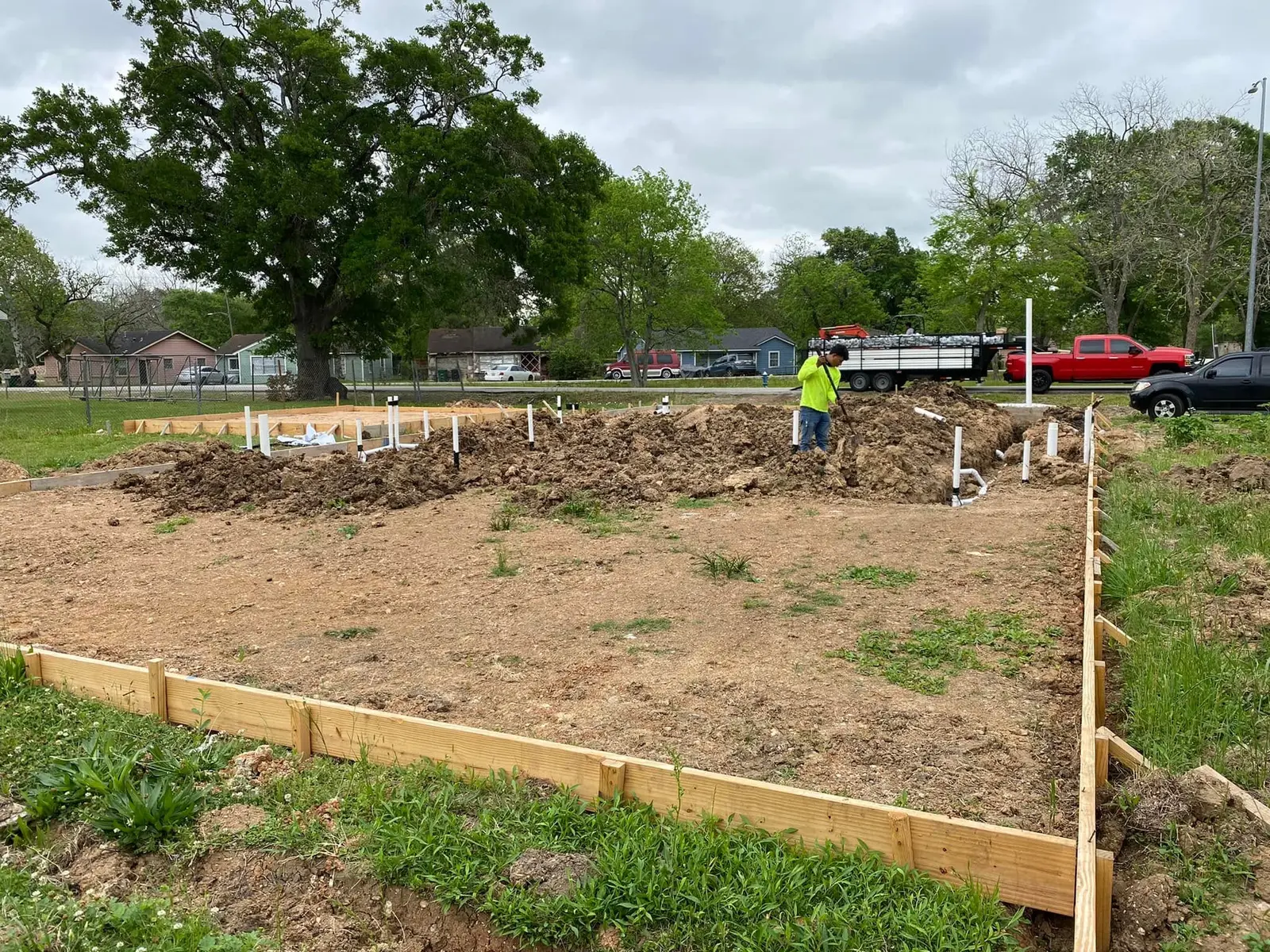
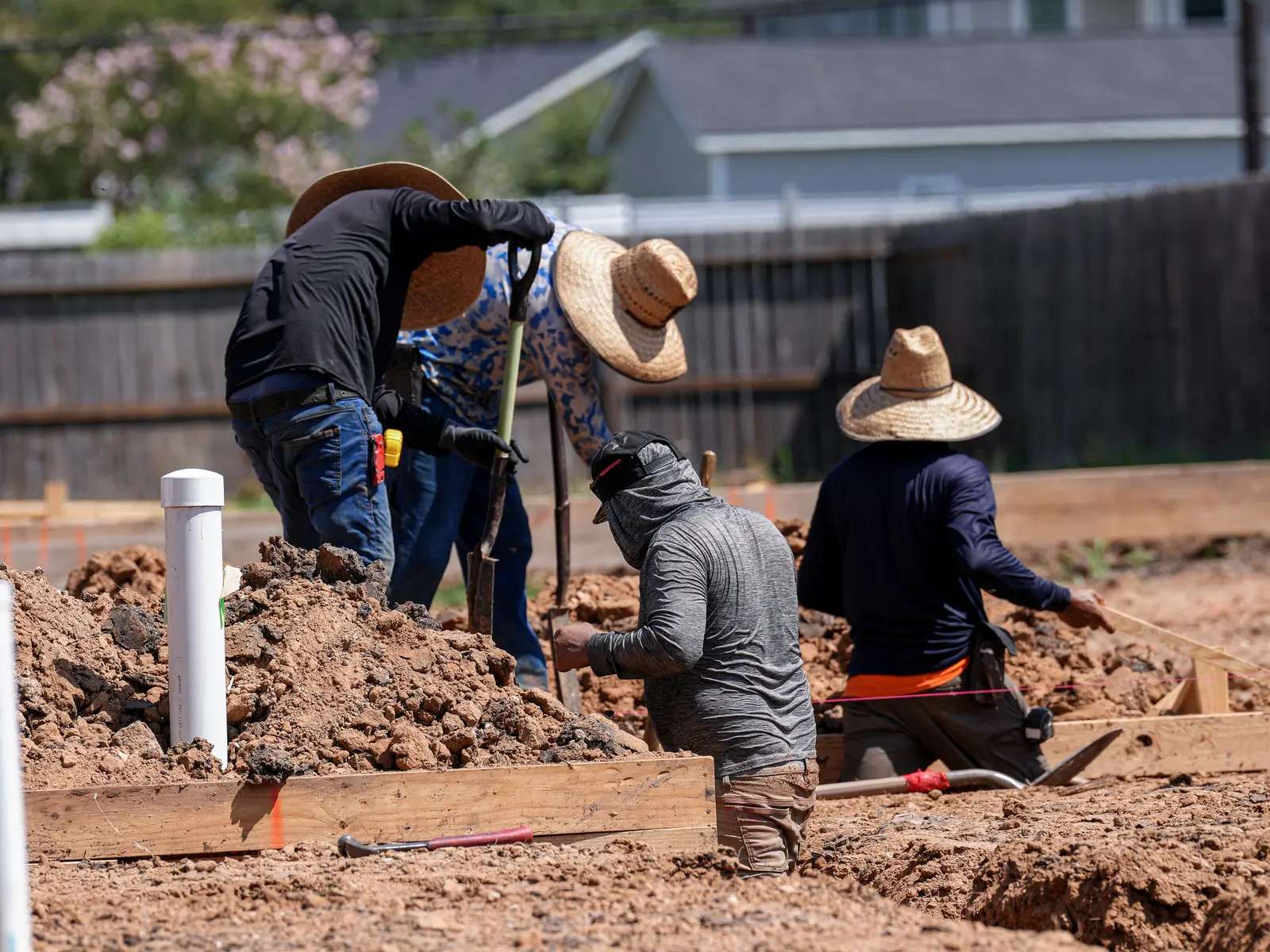
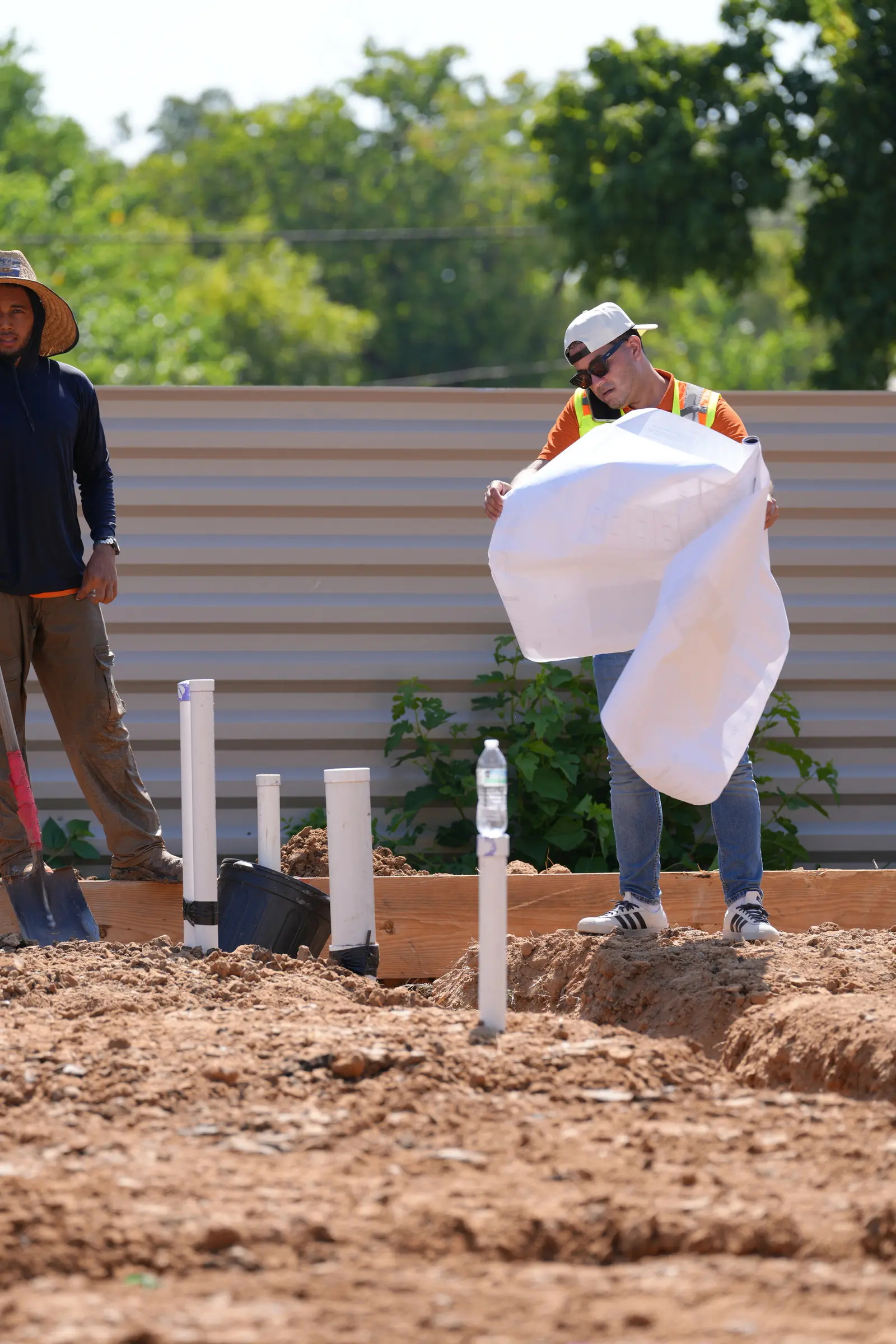
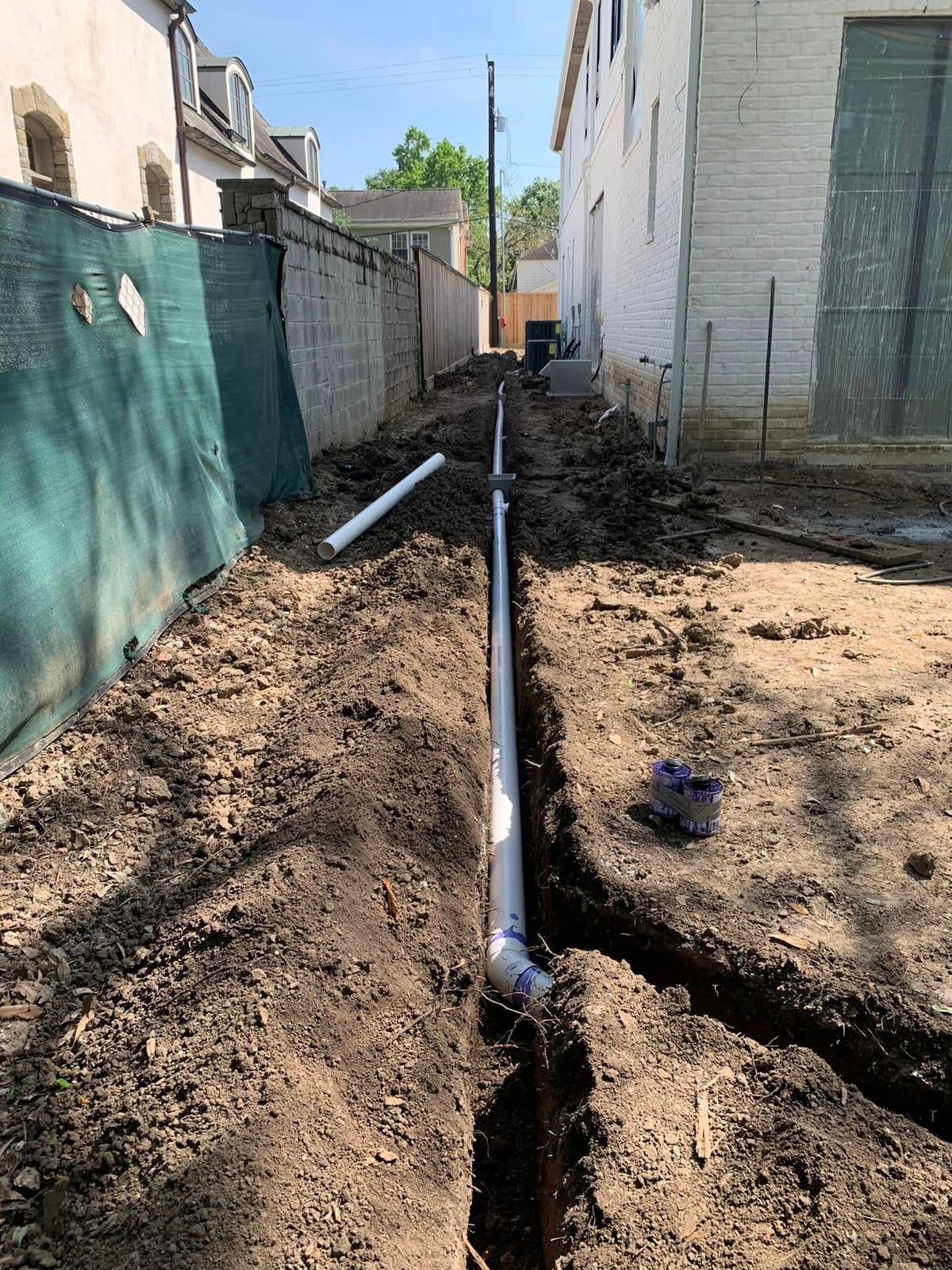
Trenching for foundation beams and for underground utilities, and excavation for the work that follows. From here the job moves to forms, steel and concrete.

Clearing a lot to build on it

A lot can be cleared in a day by someone who will never see it again. The difference when a builder does it is that every decision is made with the house in mind. Where the pad goes decides which trees can stay. The finished floor elevation decides how much fill is needed and where it comes from. The way water crosses the lot today decides how it has to be graded so that it leaves the lot tomorrow without crossing the slab or the neighbor’s yard.

Clearing that ignores those questions gets done twice: trees taken out that could have shaded the back porch, a pad built in the wrong place, fill that was never compacted and has to be dug out before the foundation. When the same contractor is going to trench, pour and frame on that ground, the site is prepared for what comes next. See building on your lot for how the whole sequence runs, and framing for the stage after the slab.

We also clear and prepare lots we are not building on. If another builder is handling the house, we work from their site plan and elevations and hand over a pad ready for their foundation crew.

Trees, permits and rules that apply before work starts

Most of the delay in site work happens before any equipment moves. These are the approvals and checks we go through for the address, so that work is not stopped once it has started.

  • Utility locates. Texas law requires a call to 811 at least two business days before digging, so that buried gas, electric, water and communication lines are marked. We make the request and wait for every utility to respond.
  • Demolition permits and disconnects. Inside the City of Houston a demolition permit is required to take down any house or building, and the sewer has to be disconnected and inspected by a licensed plumber before the permit is issued. Power and gas are disconnected by the utilities. Other cities and counties have their own process.
  • Asbestos surveys. Commercial and public buildings need an asbestos survey before demolition, and Houston asks for proof of it with the permit application. For older houses we tell you when a survey is the prudent step.
  • Floodplain. In a mapped flood hazard area, grading and placing fill generally need a floodplain development permit from the city or county before the work is done.
  • Stormwater. A project that disturbs one acre or more of ground falls under the state construction stormwater permit, which requires erosion and sediment controls on the site.
  • Trees and deed restrictions. Some cities, subdivisions and deed restrictions protect certain trees or limit clearing. We check before a tree is marked for removal.
  • Septic and wells. On acreage, the location of an existing or planned septic system and water well affects where the pad and the driveway can go.

How a lot gets ready

  1. Site visit and plan

    We walk the lot with you and the survey, and agree what stays, what goes and where the building will sit.

  2. Approvals and locates

    Permits, utility disconnects and 811 locates are in place before equipment arrives.

  3. Demolition and clearing

    Structures come down, the lot is cleared and grubbed, and debris is hauled off or separated for disposal.

  4. Rough grade

    The lot is cut and filled to the plan so water has somewhere to go.

  5. Pad and compaction

    Fill is placed and compacted in layers to the pad elevation.

  6. Trenching and hand-off

    Beams and utilities are trenched, and the site is ready for forms, steel and concrete.

What drives the cost of site work

Two lots of the same size can differ widely in what it takes to make them buildable, so we price site work after seeing the lot, not by the acre over the phone.

What moves the price

  • Area to be cleared, and how dense and how large the trees are
  • Whether debris is hauled off or can be handled on site
  • Demolition: the size and construction of what is coming down, and disposal fees
  • Access for equipment and trucks, and protection of streets, driveways and neighbors
  • Fill: how much has to be imported and compacted to reach the pad elevation
  • Drainage work, and conditions found below the surface
  • Permits, surveys and utility disconnects

After a site visit we give you a written, itemized estimate with demolition, clearing, fill and grading shown as separate lines.

A backyard pool removed and regraded

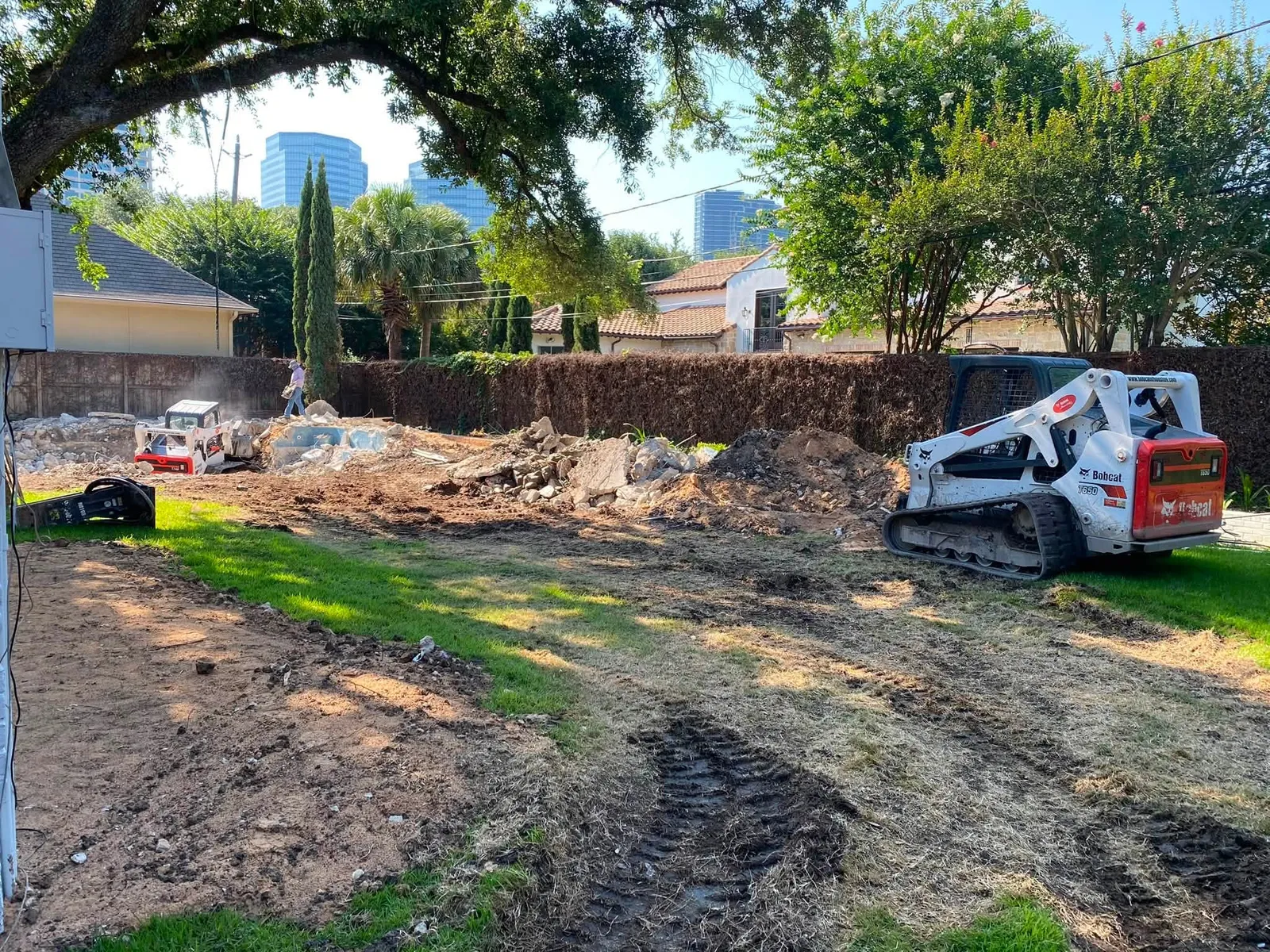
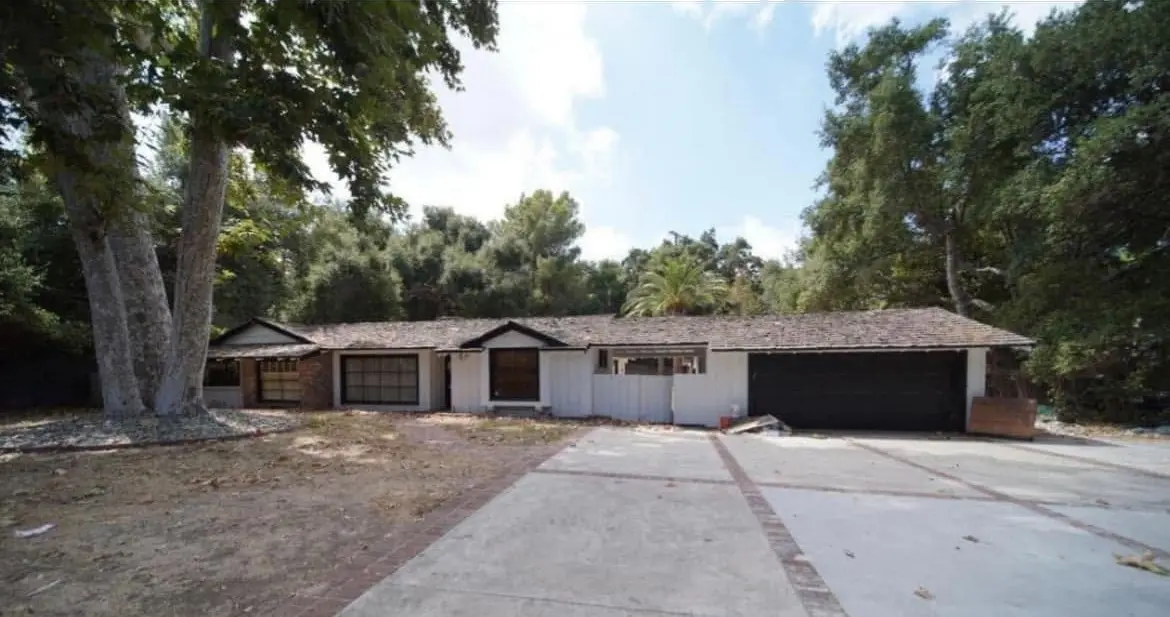
An old pool is often what stands between a homeowner and the yard, the addition or the new house they want. These photos are from a backyard where we took out an in-ground pool: the concrete shell was broken up with equipment working from the edge, and the yard was rough-graded once the pool was gone.

How a pool is removed matters later. A shell that is fully broken out and a hole that is backfilled in compacted layers leaves ground that can be built on or planted; a pool that is simply filled in can settle and hold water for years. If you plan to build where the pool was, tell us at the start, because it changes how the backfill is done. Planning a new pool instead? See pools.

Land clearing and demolition: questions land owners ask

Still unsure? Ask us directly and we will answer in plain terms.

Do I need a permit to clear my land or demolish a house?
It depends on where the lot is and what is being done. Inside the City of Houston, demolishing any house or building requires a demolition permit, and the sewer must be disconnected and inspected first. Grading or filling in a mapped floodplain generally needs a floodplain development permit, and a site that disturbs an acre or more comes under the state stormwater permit. Clearing brush on a lot outside a floodplain often needs no permit, but deed restrictions and some cities protect certain trees. We check for your address. See permit services.
Can you save specific trees?
Yes, and it is easier before clearing starts than after. We mark the trees you want to keep, fence them so equipment and fill stay off their roots, and place the pad and the driveway with them in mind. Tell us which ones matter to you at the first visit.
Do you haul everything away?
Yes. Demolition debris, concrete, stumps and brush are loaded and hauled to the appropriate disposal or recycling site, and haul-off is a line in the estimate. If you want material left on site, such as wood chips or clean fill, we can plan for that.
How long is it from clearing to a slab?
The work on the ground is usually the short part. Permits, utility disconnects, the foundation design and weather set the pace: wet clay cannot be compacted properly, so a rainy spell can hold up pad work. We give you a schedule with the estimate and update it as approvals come in.
Can you remove an in-ground pool?
Yes. We break out and remove the shell, backfill the excavation in compacted layers and regrade the yard so it drains. Tell us whether you plan to build over the area, because that changes how the backfill is done.
Do you clear lots that you are not building on?
Yes. We take clearing, demolition and pad work as its own job for land owners and for other builders, working from your survey or your builder’s site plan.
What does land clearing cost per acre?
A per-acre figure is misleading, because tree density, haul-off, access, fill and drainage vary so much from one lot to the next. We look at the lot and give you a written, itemized estimate.

Have a lot that needs clearing or a structure that needs to come down?

Send a few details, including the lot address or the nearest cross street, and we will follow up to schedule a site visit. You get a written, itemized estimate before any work starts.

  • Written, itemized estimate
  • Permits and approvals handled for you
  • One point of contact from start to finish

Request an estimate

Tell us what you are planning. We follow up to schedule a site visit.

We use your details only to respond about your project. We do not sell or share them. See our privacy policy.